
Friday, November 20, 2026 · in 11 days
World Children's Day: History, Going Blue & Children's Days Worldwide 2026
Why November 20 marks the 1959 Declaration and 1989 Convention on the Rights of the Child, the 1954 UN resolution behind Universal Children's Day, Japan's and Türkiye's own children's days, a UNICEF-style 'go blue' plan and a classroom rights activity.
Updated 6 messages 10 quotes Tap to copy any message
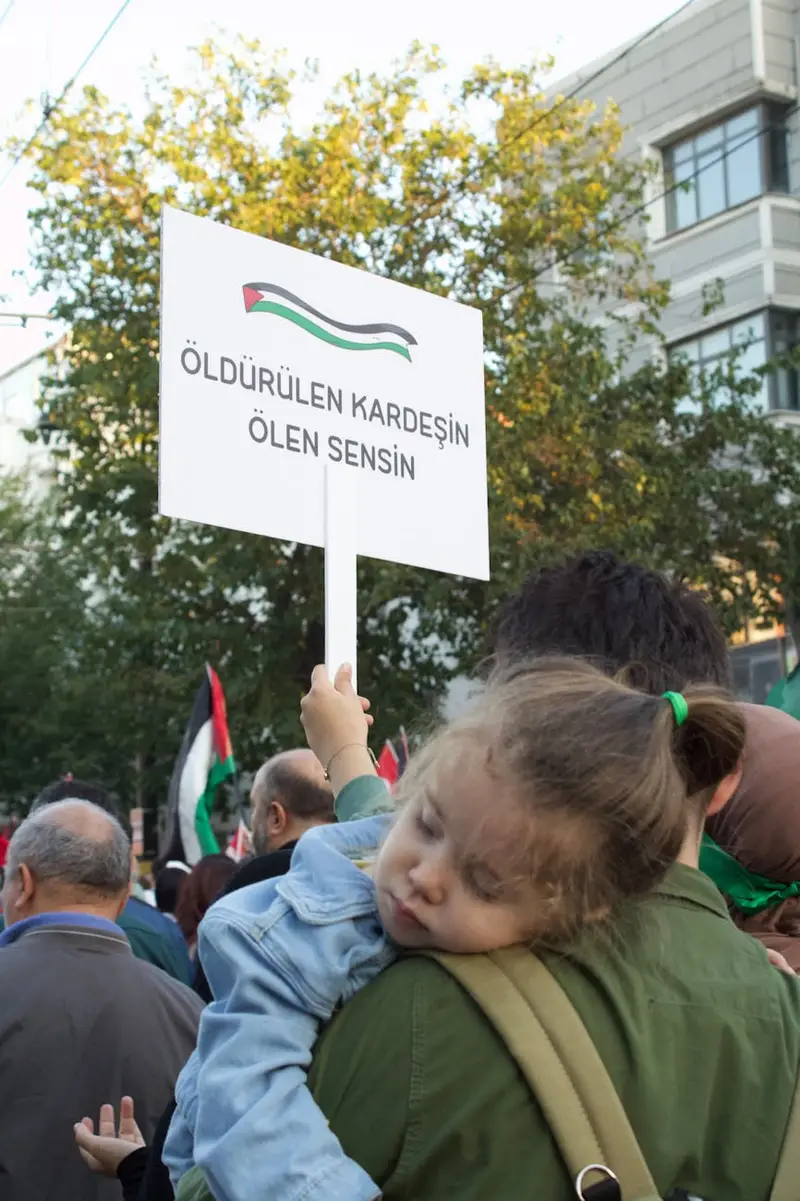
World Children’s Day is held on November 20, the date on which the UN General Assembly adopted both the Declaration of the Rights of the Child in 1959 and the Convention on the Rights of the Child in 1989. UNICEF runs it as a day “for children, by children”: landmarks light up blue and children take over adults’ jobs for the day (UNICEF). Many countries also keep a children’s day of their own on a different date, which the original 1954 UN resolution explicitly allowed.
Origin: From Universal Children’s Day to World Children’s Day
- 14 December 1954. In resolution 836 (IX), the General Assembly recommended that “with effect from 1956, a Universal Children’s Day shall be instituted by all countries,” to be observed as “a day of world-wide fraternity and understanding between children” and of activity for children’s welfare. It did not fix a date: it suggested that each government observe the day “on the date and in the way which each considers appropriate,” and asked UNICEF and UNESCO to follow it up. That is why national children’s days still fall on many different dates.
- 20 November 1959. The General Assembly adopted the Declaration of the Rights of the Child, resolution 1386 (XIV).
- 20 November 1989. Thirty years to the day later it adopted the Convention on the Rights of the Child (CRC), resolution 44/25. The CRC defines a child as “any person under the age of 18” (Article 1) (UNICEF, children’s version).
- Today. UNICEF leads World Children’s Day on November 20 as its global day of action for child rights; each year has its own theme, often asking children to tell world leaders what future they want (UNICEF).
Children’s Days Around the World
- Japan: Kodomo no Hi, May 5. Japan’s 1948 national holidays law (Act No. 178 of Shōwa 23) makes May 5 Kodomo no Hi, a day “to respect children’s personalities, to plan for their happiness, and to thank mothers” (Cabinet Office of Japan). It grew out of Tango no Sekku, the seasonal festival on the fifth day of the fifth month that dates from the 7th century. Families fly koinobori, carp streamers (a large black carp for the father, a red one for the mother, smaller ones for the children), display a samurai helmet or warrior doll, often given by maternal grandparents, and eat rice cakes wrapped in oak leaves (Martyn Smith, University of Sheffield, The Conversation).
- Türkiye: 23 April, National Sovereignty and Children’s Day. A law of 23 April 1921 made the anniversary of the opening of the Grand National Assembly a national holiday. In 1929 Atatürk dedicated the day to children, and it was first celebrated as Children’s Day that year. It took its current name, Ulusal Egemenlik ve Çocuk Bayramı, in 1983, and since 1979 children from other countries have been invited to join the celebrations, starting with six countries (Sözcü).
- Worldwide on November 20. UNICEF says schools and landmarks “go blue”, from the Eiffel Tower to hundreds of historic buildings in India, and that children take over high-profile roles in media, politics, business, sport and entertainment to speak about the issues that matter to them (UNICEF).
Plan a “Go Blue” Day at a School or Club
UNICEF asks schools to light up or paint their buildings blue and to help students learn their rights (UNICEF). A simple version:
- Four weeks before: get permission from the head teacher or building owner. If you want to light a building, ask the site manager whether blue gels or coloured LED floodlights can be used. Check UNICEF’s World Children’s Day page for that year’s theme and materials.
- Two weeks before: ask everyone to wear something blue on November 20. Choose a children’s “takeover”: students run the morning assembly, the school newsletter or social media, or shadow the head teacher for an hour.
- One week before: students choose which rights from the CRC to feature (see the activity below) and prepare posters in blue.
- On the day: blue clothes, the takeover, and a short assembly where students read their chosen articles aloud. Photograph the blue building at dusk.
- Afterwards: send what the children said to your local council or member of parliament, or share it through UNICEF’s U-Report youth platform.
Classroom Activity: Rights in Plain Words (40 minutes, ages 8–13)
UNICEF publishes a children’s version of the CRC. Use these articles, quoted from it (UNICEF):
- Article 12: “Children have the right to give their opinions freely on issues that affect them. Adults should listen and take children seriously.”
- Article 13: “Children have the right to share freely with others what they learn, think and feel, by talking, drawing, writing or in any other way unless it harms other people.”
- Article 28: “Every child has the right to an education.”
- Article 31: “Every child has the right to rest, relax, play and to take part in cultural and creative activities.”
- Article 42: “Governments should actively tell children and adults about this Convention so that everyone knows about children’s rights.”
Steps
- (5 minutes) Explain that the UN General Assembly adopted the Convention, from which this list comes, on 20 November 1989.
- (15 minutes) In groups, each takes one article and draws a poster that shows it happening in their school or town.
- (10 minutes) Using Article 12, each group writes one suggestion for something adults should change, and why.
- (10 minutes) Groups present. Put the posters up for the “go blue” day and pass the suggestions to the school council, as Article 42 asks adults to make the Convention known.
Messages
- “Happy World Children’s Day! Every child has the right to be heard.”
- “Going blue today for children’s rights, on the day the Convention was adopted.”
- “Kodomo no Hi omedetō! May the carp streamers fly high for every child in the house.”
- “Mutlu 23 Nisan! Happy National Sovereignty and Children’s Day to every child in Türkiye.”
- “To the children taking over the classroom, the newsroom and the council chamber today: we’re listening.”
- “Every child deserves to play, learn and grow up safe. Happy World Children’s Day.”
Quotes
- “Mankind owes to the child the best it has to give. – Declaration of the Rights of the Child (1959)”
- “Children are the world’s most valuable resource and its best hope for the future. – John F. Kennedy”
- “A child’s world is fresh and new and beautiful, full of wonder and excitement. – Rachel Carson”
- “Every child comes with the message that God is not yet discouraged of man. – Rabindranath Tagore”
- “Children have never been very good at listening to their elders, but they have never failed to imitate them. – James Baldwin”
- “If there is anything that we wish to change in the child, we should first examine it and see whether it is not something that could better be changed in ourselves. – Carl Jung”
- “The Child is father of the Man. – William Wordsworth”
- “Children are not things to be molded, but are people to be unfolded. – Attributed to Jess Lair”
- “The greatest gifts you can give your children are the roots of responsibility and the wings of independence. – Attributed to Denis Waitley”
- “The days are long, but the years are short. – Attributed to Gretchen Rubin”
FAQ
When is World Children’s Day 2026? World Children’s Day is observed annually on November 20th, making it Friday, November 20, 2026.
Why November 20? It is the anniversary of the UN’s adoption of the Declaration of the Rights of the Child in 1959 and the Convention on the Rights of the Child in 1989 (UNICEF).
Who established it? The UN General Assembly recommended a Universal Children’s Day in resolution 836 (IX) on 14 December 1954, to begin in 1956, but left each country to choose the date. UNICEF now leads World Children’s Day on November 20.
What does “go blue” mean? UNICEF asks schools and landmark buildings to light up or paint themselves blue on November 20 to show support for child rights (UNICEF).
Do other countries have their own children’s day? Yes, because the 1954 resolution let each country pick its date. Japan’s is May 5 (Cabinet Office of Japan) and Türkiye’s is 23 April (Sözcü).
Who counts as a child under the Convention? Anyone under 18 (Article 1) (UNICEF).
Related Celebrations
As you observe World Children’s Day, explore our guides for International Human Rights Day for rights advocacy, World Teachers’ Day for the people who teach children, and National Family Day for family time. For learning celebrations, check our International Literacy Day and World Health Day articles.
Related holidays

November 19
International Men's Day
September 21
International Day
June 5
World Environment Day
December 1
World AIDS Day