
Sunday, October 31, 2027 · in 356 days
Halloween History, Traditions, Barmbrack Recipe & Messages 2027
Where Halloween comes from, from Samhain and All Hallows' Eve to Scottish guising and Irish turnip lanterns, plus a fortune-telling barmbrack recipe, messages and verified spooky quotes.
Updated 6 messages 10 quotes Tap to copy any message
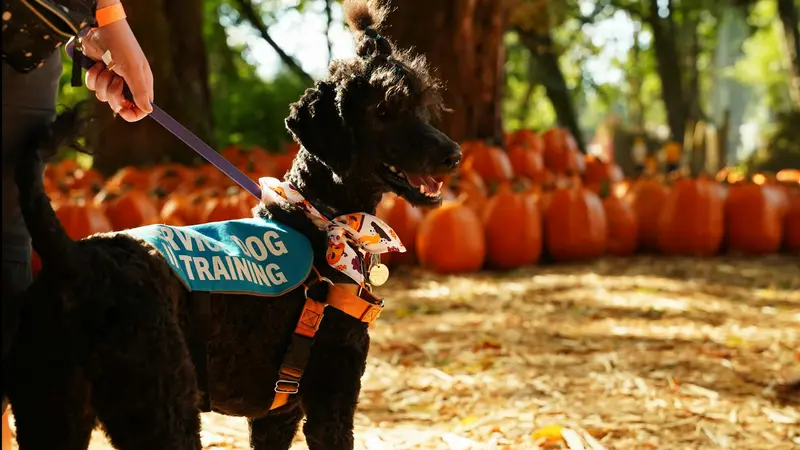
Halloween is the night of October 31, the eve of All Hallows’ (All Saints’) Day. Its customs grew from the Gaelic festival of Samhain in Ireland and Scotland, and the first jack-o’-lanterns were carved from turnips, not pumpkins: a turnip “ghost” lantern from around 1900 is on display at the National Museum of Ireland in Castlebar, County Mayo (Tourism Ireland).
Where Halloween Comes From
Samhain. In the Gaelic calendar Samhain marked the end of the harvest and the start of the dark half of the year. Historic Environment Scotland explains that Samhainn (Scottish Gaelic) fell on 1 November with the festivities starting the night before, and was a time when the boundary with the other world was thought to weaken so that ancestors and fairies could roam; the festival is called Samhain in Irish and Sauin in Manx (Historic Environment Scotland).
All Hallows’ Eve. The name is Christian. A feast for all martyrs was kept on May 13 as early as the fourth century; Pope Gregory III dedicated a chapel in Rome to all saints on November 1, and Pope Gregory IV ordered the feast observed generally in 837. In medieval England the feast was called All Hallows (hallow meaning saint), so the night before became All Hallows’ Eve, or Halloween (Trinity Church Wall Street).
A common myth, corrected. It is often stated as fact that the Church moved All Saints’ Day to November 1 to replace Samhain. The sources are more careful: Historic Environment Scotland says Samhainn was “possibly purposefully assimilated” when the feast moved, and the move itself happened in stages over about a century. What can be said is that the Christian feast and the older festival came to share the same night, and Halloween’s folk customs carry traces of both.
Crossing the Atlantic. Irish and Scottish emigrants brought Halloween to North America in the 19th century and swapped turnips for pumpkins, which were in season and easier to carve (Tourism Ireland). American newspapers at first mocked it as old-country superstition: an 1866 Philadelphia paper complained of pranksters “hanging dead cats to door-bells,” while an 1867 report from Baton Rouge described gentler “games with nuts and apples” (National Endowment for the Humanities, from Chronicling America).
“Trick or treat.” The custom of going door to door is old, but the phrase is recent. Historian Nick Rogers (York University) traces the earliest printed “trick or treat” he knows to The Blackie Times of Blackie, Alberta, on November 3, 1927. Rogers links door-to-door visiting to medieval “souling,” when people collected food in return for praying for the dead, and to Gaelic and Welsh “mumming.” Halloween pranks became so rough between the wars that in 1950 the U.S. Senate recommended renaming the night “Youth Honor Day”; that never caught on, but collecting for UNICEF while trick-or-treating did (CBC News).
Halloween Traditions by Place
Ireland
- Bonfires at Athboy and Trim, County Meath. In some places families let their hearth fires go out and relit them from the communal Samhain bonfire. The Púca Festival in Athboy and Trim lights a ceremonial fire on October 31 (Tourism Ireland).
- Turnip lanterns and Stingy Jack. The folk tale is of Jack, a blacksmith who tricked the Devil and was condemned to wander Ireland with only a flame inside a hollowed-out turnip to light his way, as told by Clodagh Doyle, Keeper of the Irish Folklife Division at the National Museum of Ireland (Tourism Ireland).
- Fortune-telling food. Barmbrack (bairín breac), a fruit loaf, has tokens baked into it: a ring for marriage within the year, a coin for riches, a rag for poverty. Colcannon (mashed potato with kale and onion) was laced with tokens in the same way. Apple bobbing and “snap apple” were games too: the first to bite the apple would be the next to marry (same source).
- Inis Mór, County Galway. On the largest of the Aran Islands, people still go out masked and stay silent even in the pubs, writing down their drinks orders (same source).
Scotland
- Guising. Historic Environment Scotland calls guising “the original form of trick or treating.” Children were disguised so that roaming spirits would not steal them, and they went house to house telling jokes or performing to earn their treat. James V is said to have gone guising among the villages near Stirling Castle (Historic Environment Scotland).
- Tumshie lanterns. Turnips (“tumshies” in Scots) were carved with fearsome faces and lit with a candle to scare off fairies and ghosts (same source).
- Bonfires and divination. Bonfires (samhnagan) were built on high ground; on the islands neighbours competed for the biggest. Couples each put a nut on the fire: a quiet, even burn meant a good match, hissing meant trouble. In a custom mentioned in Robert Burns’s poem “Halloween,” people pulled a kale stalk in the dark with their eyes closed, and its shape foretold a future partner; earth clinging to the roots promised a wealthy one (same source).
- Fuarag na Samhna. Toasted oats folded into whipped cream, with tokens hidden inside: a coin for money, a ring for engagement, a button for losing money, a thimble for another year single (same source).
Canada and the United States
The first printed “trick or treat” comes from rural Alberta (see below). By the 1950s Halloween was a home-made family occasion: Washington’s Evening Star printed party recipes such as popcorn balls and orange-gelatin jack-o’-lanterns, which the Library of Congress has gathered from its newspaper archive (Library of Congress). For Mexico’s observance on November 1 and 2, see the Day of the Dead.
Bake a Halloween Barmbrack (with Fortune Tokens)
This is the quick “tea brack” style that needs no yeast. Makes one 2 lb (900 g) loaf, about 12 slices.
Ingredients
- 400 g (about 2 1/2 cups) mixed dried fruit: raisins, sultanas, currants and a little candied peel
- 150 g (3/4 cup packed) light brown sugar
- 300 ml (1 1/4 cups) strong black tea, cooled
- 1 large egg, beaten
- 225 g (1 3/4 cups) self-raising flour (or all-purpose flour plus 2 1/2 tsp baking powder)
- 1 tsp mixed spice (or 1/2 tsp cinnamon, 1/4 tsp nutmeg, a pinch of cloves)
- Tokens: a clean ring, a coin and a small scrap of cloth, each wrapped tightly in baking parchment
Method
- The night before: put the fruit and sugar in a bowl, pour over the cold tea, cover and leave to soak for at least 6 hours, or overnight.
- Heat the oven to 170°C (325°F; 150°C fan). Grease and line a 2 lb loaf tin.
- Stir the beaten egg into the soaked fruit, then fold in the flour and spice until no dry flour remains. The batter will be thick and wet.
- Spoon half into the tin, push the wrapped tokens in at different points, then cover with the rest and smooth the top.
- Bake for 1 hour to 1 hour 15 minutes, until a skewer comes out clean. If the top darkens too fast, cover loosely with foil after 45 minutes.
- Cool in the tin for 10 minutes, then on a rack. Wrapped, it slices better the next day and keeps for about 4 days.
- Serve in thick slices with butter. Tell everyone there are tokens inside before they bite, and read the fortunes as they turn up: ring, marriage; coin, money; cloth, a lean year.
Carving a turnip lantern instead of a pumpkin. Use a large swede (rutabaga). Slice off the top as a lid, then hollow it with a sturdy metal spoon or melon baller, working in small scoops and leaving walls about 1 cm (1/2 inch) thick; this takes 30 to 45 minutes, far longer than a pumpkin. Cut the face with a small paring knife, push a skewer through the lid to make a chimney hole, and light it with a battery tea light.
Halloween Messages
- “May the ring be in your slice of barmbrack and the coin in your pocket. Happy Halloween!”
- “Happy Halloween! May your turnip lantern glow and your guising earn you a full bag of nuts and apples.”
- “Snap apple, bonfires and barmbrack: wishing you an old-fashioned Irish Halloween.”
- “Trick or treat! Wishing you a full bag of sweets and a costume nobody guesses.”
- “Hope your Halloween is wickedly wonderful and monstrously fun!”
- “Happy Samhain to everyone lighting a fire at the turn of the year. May the dark half be gentle.”
Inspiring Quotes
- “By the pricking of my thumbs, something wicked this way comes. – William Shakespeare”
- “There is something at work in my soul, which I do not understand. – Mary Shelley”
- “O autumn winds that bake and burn and all the world to darkness turn, now storm and seize and make of me a swarm of leaves from Autumn’s Tree! – Ray Bradbury”
- “Halloween was close, our favorite holiday because it carried none of the pain-in-the-ass holiness of Christmas and still there was free candy. – Jeffrey Ford”
- “Halloween was confusing. All my life my parents said, ‘Never take candy from strangers.’ And then they dressed me up and said, ‘Go beg for it.’ – Rita Rudner”
- “The witches fly across the sky, the owls go, ‘Who? Who? Who?’ And the black cats yowl and the green ghosts howl, Scary Halloween boo! – Nina Willis Walter”
- “Everyone is entitled to one good scare. – Halloween (1978) tagline”
- “Nothing on Earth so beautiful as the final haul on Halloween night. – Attributed to Steve Almond”
- “Every day is Halloween, isn’t it? For some of us. – Attributed to Tim Burton”
- “When witches go riding, and black cats are seen, the moon laughs and whispers, ‘tis near Halloween. – Unknown”
Frequently Asked Questions
When is Halloween 2027? Halloween falls on Sunday, October 31, 2027. It is always October 31, the eve of All Saints’ Day on November 1.
Is Halloween pagan or Christian? Both. The name and date come from the Christian feast of All Hallows, set on November 1 by Pope Gregory IV in 837, while many of the folk customs (bonfires, disguises, divination) are associated with the Gaelic festival of Samhain (Trinity Church Wall Street; Historic Environment Scotland).
Why were jack-o’-lanterns first made from turnips? Turnips were plentiful in Ireland and Scotland after the harvest. Emigrants to North America switched to pumpkins because they were in season and much easier to carve (Tourism Ireland).
What is guising? The Scottish forerunner of trick-or-treating: children in disguise go door to door and tell a joke, sing or recite to earn a treat, rather than threatening a trick (Historic Environment Scotland).
Related Celebrations
As you plan your Halloween celebration, you might also enjoy exploring our guides for Thanksgiving festivities, Day of the Dead traditions, and Autumn Equinox seasonal celebrations.
Related holidays
November 1
Day of the Dead
October 29
Diwali: The Five Days, Regional Traditions, Recipe
October 29
World Stroke Day
October 20
International Chefs Day