
November 1–2, 2027 · in 357 days
Day of the Dead (Día de Muertos): Origins, Regional Traditions & Pan de Muerto 2027
Why UNESCO lists Mexico's Day of the Dead as world heritage, how it is kept in Michoacán, Mexico City, Campeche and Yucatán, how to build an ofrenda, a pan de muerto recipe, plus messages and quotes.
Updated 6 messages 9 quotes Tap to copy any message
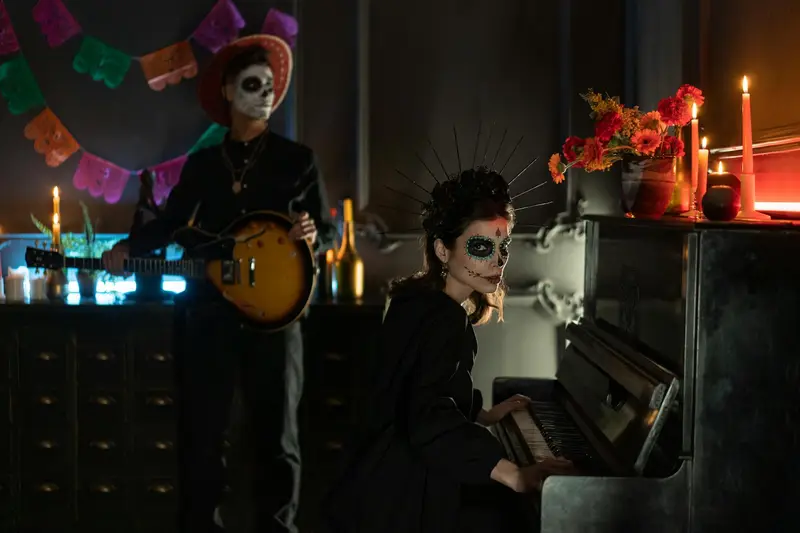
Día de Muertos, the Day of the Dead, is Mexico’s festival for the temporary return of the dead, held from late October to November 2, with November 1 and 2 as the main days. UNESCO lists it as intangible cultural heritage of humanity, describing families who prepare the dead’s favourite foods, set offerings and flowers on home altars and graves, and lay a path to guide the souls from the cemetery to their homes (UNESCO).
Origin: Pre-Hispanic Rites Meet the Catholic Calendar
UNESCO describes the festival as the fusion of pre-Hispanic religious rites with the Catholic feasts brought by the Spanish in the sixteenth century, which is why its main days coincide with All Saints’ Day (November 1) and All Souls’ Day (November 2). It was first proclaimed a Masterpiece of the Oral and Intangible Heritage of Humanity in 2003 and inscribed on UNESCO’s Representative List of the Intangible Cultural Heritage of Humanity in 2008, under the name “Indigenous festivity dedicated to the dead” (UNESCO).
The Mexican magazine México Desconocido traces the Michoacán observance to the same mixture: ancient rites around death impressed the early Spanish missionaries, who folded them into evangelisation, and the custom took root during the colonial period. It notes that Tiripetío was once a religious centre dedicated to the ancestors, where yellow cempasúchil (marigold) flowers were offered (México Desconocido).
It is not “Mexican Halloween.” The two fall close together, but they have different roots: as UNESCO describes it, Día de Muertos grew from indigenous Mexican rites joined to the Catholic feasts, and it is a family festival of welcome and remembrance with its own altars, foods and graveside vigils rather than a night of costumes and fright like Halloween.
How It Is Kept in Four Mexican States
- Michoacán: Janitzio, Tzintzuntzan and Jarácuaro. Around Lake Pátzcuaro, the night of November 1 is spent placing offerings on graves. On the island of Janitzio, women and children walk to the cemetery in silence by candlelight and lay out their dead relatives’ favourite foods and a petate (mat). In Tzintzuntzan, families put their best crafts on the ofrendas: black and glazed pottery, straw angels, carved wood. On the island of Jarácuaro an arch of flowers is raised for each neighbourhood. Purépecha young people also play the terúscan, a ritual “raid” in which they gather maize, squash and flowers from fields and rooftops with the authorities’ permission, and the harvest is shared at a communal meal (México Desconocido).
- Mexico City: San Andrés Mixquic. In the Tláhuac borough, the cemetery of San Andrés Mixquic is lit with candles for the alumbrada on November 1 and 2. Residents, borough staff and city workers spend the days before clearing and repainting the cemetery, and the town receives very large crowds; Excélsior reported 2 million visitors in a single pandemic year (Excélsior).
- Campeche: cleaning the bones in Pomuch. In the Maya town of Pomuch (Hecelchakán municipality), families keep the bones of relatives who died at least three years earlier in wooden boxes in open niches in the cemetery. Each year, between October 26 and November 2, they dust the bones one by one and wrap them in a new hand-embroidered cloth, often decorated with angels, flowers and the person’s name. The custom, called Choo Ba’ak, was inscribed as cultural heritage of the State of Campeche on October 30, 2017 (México Desconocido; El Financiero).
- Yucatán: Hanal Pixán and the pib. In Yucatán the festival is called Hanal Pixán, Maya for “food of the souls.” Its signature dish is the pib or mucbipollo, a giant tamale of chicken or pork with achiote-coloured masa, espelón beans and k’ool (a thick sauce of broth and masa), wrapped in banana leaves and traditionally baked buried in the ground. The name means “that which must be buried”, and the tamale is said to represent the body of the dead; by custom, families who lost someone that year or the year before do not eat it (México Desconocido).
How to Build an Ofrenda
There is no single correct altar; México Desconocido stresses that each region has its own rites. These elements appear on most ofrendas, and each has a meaning (México Desconocido):
- Choose the place and set it up before the dead arrive, on a table or shelf in the main room, ideally by October 31 so it is ready for November 1 and 2.
- A photograph and something the person wore or used, so they recognise their altar.
- A glass of water to quench the souls’ thirst after the long journey and strengthen them for the return.
- Candles (once torches of ocote pine) to light the way home. Never leave them burning unattended.
- A petate (mat) for the visitors to rest on.
- Pan de muerto and the dead person’s favourite food and drink, set out fresh.
- Cempasúchil (marigolds), whose colour and scent mark the path. Scatter petals from the door to the altar.
- Take it down after November 2. Many families then share the food among the living.
Pan de Muerto Recipe (2 medium loaves)
This is a home version of the sweet, orange-scented bread with dough “bones” across the top.
Ingredients
- 500 g (4 cups) bread or all-purpose flour
- 100 g (1/2 cup) sugar, plus extra for coating
- 7 g (2 1/4 tsp) instant yeast
- 1 tsp salt
- Finely grated zest of 1 orange
- 120 ml (1/2 cup) lukewarm milk
- 3 eggs plus 2 yolks, at room temperature
- 1 tbsp orange-blossom water
- 115 g (1/2 cup) soft butter, plus 50 g melted for brushing
Method (about 4 hours, mostly rising)
- Mix the flour, sugar, yeast, salt and zest. Add the milk, eggs, yolks and orange-blossom water and knead for 8 minutes.
- Add the soft butter a spoonful at a time and knead for another 8 to 10 minutes, until the dough is smooth, elastic and only slightly tacky.
- Cover and leave to rise in a warm place for 1 1/2 to 2 hours, until doubled.
- Set aside about 150 g of dough. Divide the rest into two balls and place them on a lined baking tray.
- From the reserved dough, roll ropes and press your fingers along them to make knobbly “bones”. Lay two across each loaf in an X and add a small ball on top for the skull. Moisten with a little water so they stick.
- Cover and leave to rise for 45 minutes. Heat the oven to 180°C (350°F).
- Bake for 30 to 35 minutes, until deep golden and hollow-sounding underneath. Cover loosely with foil if the bones brown too fast.
- While warm, brush with melted butter and roll or sprinkle generously with sugar.
Messages
- “The candles are lit and the table is set. Welcome home, querida familia.”
- “May the marigolds light the way home for everyone you miss today.”
- “Pan de muerto on the table and their photos on the altar: may your ofrenda be full of love.”
- “Today we set a place for those who came before us. Their memory is our feast.”
- “Thinking of you as you clean the graves and keep the night vigil. May your loved ones feel welcome.”
- “Their favourite dish, a glass of water for the journey and a path of cempasúchil petals: may they find their way back to you.”
Quotes
- “The Mexican is familiar with death, jokes about it, caresses it, sleeps with it, celebrates it; it is one of his favorite toys and his most steadfast love. – Octavio Paz”
- “To live in hearts we leave behind is not to die. – Thomas Campbell”
- “What we have once enjoyed we can never lose… All that we love deeply becomes a part of us. – Helen Keller”
- “The life of the dead is in the memory of the living. – Marcus Tullius Cicero”
- “Death is nothing at all. It does not count. I have only slipped away into the next room. – Henry Scott Holland”
- “The dead are not under the earth: they are in the tree that rustles, they are in the wood that groans, they are in the water that runs. – Birago Diop”
- “Grief is the price we pay for love. – Queen Elizabeth II”
- “Death leaves a heartache no one can heal, love leaves a memory no one can steal. – Unknown”
- “Those we love never go away, they walk beside us every day. – Unknown”
FAQ
When is Day of the Dead 2027? The main days are November 1, when many communities remember children (the angelitos), and November 2, for adults. In 2027 it runs November 1–2, 2027.
Why is the Day of the Dead on UNESCO’s heritage list? UNESCO inscribed the “Indigenous festivity dedicated to the dead” on its Representative List of the Intangible Cultural Heritage of Humanity in 2008 (it was first proclaimed in 2003) as a living tradition of Mexico’s indigenous communities that blends pre-Hispanic rites with Catholic feasts (UNESCO).
Is Day of the Dead the same as Halloween? No. They fall close together, but Día de Muertos grew out of indigenous Mexican rites and the Catholic All Saints’ and All Souls’ days. It is about welcoming dead relatives home with altars, food and graveside vigils, not about frightening costumes.
What is Hanal Pixán? The name for the festival in Yucatán, Maya for “food of the souls.” Families prepare the pib or mucbipollo, a large tamale traditionally baked in an earth oven (México Desconocido).
Can people outside Mexico take part? Yes, respectfully: build an ofrenda for your own dead, learn the meaning of each element, and visit community events run by Mexican and Mexican American organisations. Graveside customs such as Pomuch’s bone cleaning are private family rites, so visitors should ask before taking photos.
Related Celebrations
As you observe Day of the Dead, explore our related guides for Halloween for the other end-of-October tradition, Memorial Day for honoring those who served, and Grandparents Day for family heritage. For Mexican history and culture, see Cinco de Mayo and National Hispanic Heritage Month.
Related holidays
December 26
Kwanzaa: Origin, Seven Principles
June 21
World Music Day
October 11
Yom Kippur: Fast, Services, Traditions
October 2
Rosh Hashanah: Traditions, Simanim, Honey Cake