
Usually 4–8 weeks before the due date
Baby Shower Etiquette, Traditions & Messages 2026
When to hold a baby shower and who hosts, according to the Emily Post Institute, plus pregnancy customs from India, Japan, Finland and Jewish communities, card messages and verified quotes.
Updated 6 messages 9 quotes Tap to copy any message
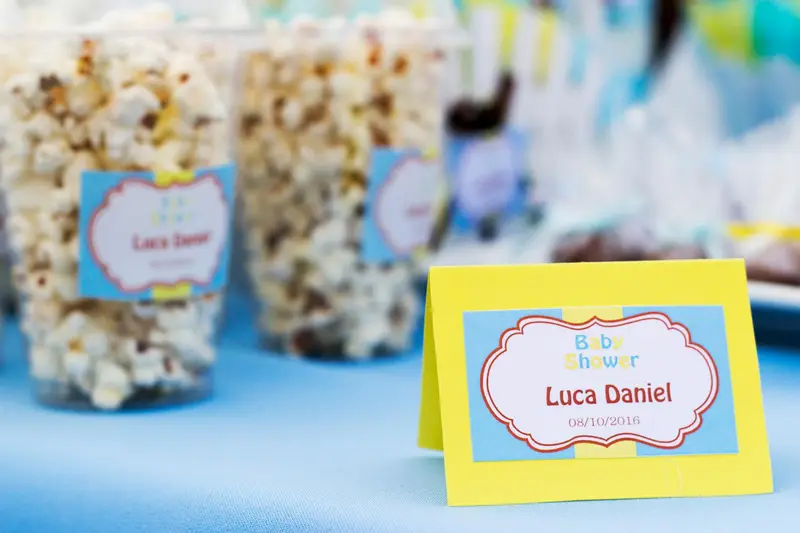
A baby shower is a party at which friends give gifts to expectant parents. The name is younger than many people assume: dictionaries first record “baby shower” in 1900–1905, around the same time as the bridal shower that gave the custom its name (Dictionary.com; Dictionary.com). Many cultures mark late pregnancy in their own way, from bangle ceremonies in South India to a free box of baby clothes from the Finnish state.
Where the Baby Shower Comes From
The word “shower” comes from the older bridal shower. That custom was taking shape in the United States in the 1890s, when a hostess would fill a paper parasol with small gifts and tip them over the guest of honour’s head (The Old Farmer’s Almanac). Dictionary.com records “bridal shower” from 1895–1900 and “baby shower” from 1900–1905 (Dictionary.com), so the gift party for a new baby seems to have borrowed the idea within a few years.
A common myth. Many websites say the baby shower goes back to ancient Egypt, Greece or Rome. No source cited here traces the modern party to those societies. The gift party called a “shower” is only recorded from the early 1900s, in North America. Other cultures bless a pregnancy with traditions of their own, described below.
Pregnancy Customs Around the World
- Seemantham / Valaikappu (South India). In Andhra Pradesh, Telangana, Karnataka and Tamil Nadu, a pregnancy blessing is held in the sixth, seventh or eighth month. The Indian National Trust for Art and Cultural Heritage (INTACH) compares it to a Western baby shower. During the ritual, kumkum is applied to the parting of the mother-to-be’s hair in honour of the goddess Lakshmi (INTACH ICH Archive).
- Inu no hi, the Day of the Dog (Japan). Dogs are associated with easy, plentiful births, so expectant families visit shrines on inu no hi, the “dog days” of the traditional zodiac calendar. They pray for a safe delivery and collect amulets for an easy birth (LIVE JAPAN). Tokyo’s Suitengu Shrine was established as a branch shrine in 1818 and is especially crowded on dog days. In the Edo period, pregnant visitors used its bell rope as a maternity belt. Today visitors stroke its “Kodakara Inu” (child-blessing dog) statue for luck (Good Luck Trip).
- The maternity box (Finland). Finland’s Maternity Grants Act of 1938 gave low-income mothers a box of baby supplies or a cash grant. In 1949 the means test was dropped and every expectant mother became eligible, provided she had a prenatal check before her fourth month. The cardboard box doubles as a first bed (BBC News). Families still apply to Kela, the national social insurance institution, after 154 days of pregnancy, choosing the package or a tax-free cash benefit (Kela). Kela publishes the current cash amount and the list of items in each year’s box on its maternity package page.
- Waiting until after the birth (Jewish custom). Many Jewish families do not hold a shower or buy baby things before the birth. This is not a religious rule. It comes from wariness of the ayin hara (evil eye). Sephardic communities have a separate ritual, the “cutting of the swaddling clothes,” held around the fifth month (Kveller). If you are unsure, ask before planning a surprise.
Baby Shower Etiquette
When to hold it. The Emily Post Institute says showers are usually held four to six weeks before the due date. They can also wait until a few weeks after the birth, for parents who would rather receive gifts once the baby has arrived (Emily Post Institute). For an adoption, the shower is held after the child comes home, and the invitation can include the child’s age and clothing size (Emily Post Institute).
Who hosts. Traditionally the host was a close friend, cousin, aunt, sister-in-law or co-worker. Immediate family usually did not host, because a gift party thrown by one’s own family looked self-serving. Today Emily Post says anyone may host “as long as there’s a legitimate reason,” for example a mother or sibling hosting so hometown friends can attend (Emily Post Institute).
Invitations and guests. Send invitations three to six weeks ahead (Emily Post Institute). Registry details go on a separate card, never on the invitation itself (Emily Post Institute). Every invitation implies a gift, so Emily Post suggests keeping the list to about 20–30 people, or holding separate family and friends showers (Emily Post Institute).
Second and later babies. Showers can be held for a second, third or fourth child, often as a smaller “sprinkle” (Emily Post Institute).
Gifts. The most common gifts are baby clothes and crib linens, followed by soft toys, mobiles and baby-care items. Friends often club together for a stroller or car seat, and relatives tend to choose keepsakes such as an engraved frame or cup, a silver rattle or a baby album. Guests are free to choose off the registry (Emily Post Institute).
At the party and after. The host keeps a list of each gift and who gave it as presents are opened. Every gift gets a handwritten thank-you note. Emily Post calls asking guests to address their own thank-you envelopes inconsiderate (Emily Post Institute).
Messages
- “Congratulations! Your family is about to grow by two feet and one heartbeat.”
- “Wishing you sleepless nights filled with joy rather than worry. Congratulations!”
- “A shower of good wishes for the three of you: may the nursery be ready, the bag be packed and the wait go quickly.”
- “From everyone who came today: we can’t wait to meet the little one. Rest up while you can!”
- “Bangles in South India, a blessing on the Day of the Dog in Japan, a box of baby clothes in Finland, and here a room full of friends. Welcome, little one.”
- “Thank you for letting us celebrate with you before the big arrival. May the last weeks be easy and the birth go smoothly.”
Quotes
- “A baby is God’s opinion that life should go on. – Carl Sandburg”
- “Every child begins the world again. – Henry David Thoreau”
- “When the first baby laughed for the first time, its laugh broke into a thousand pieces, and they all went skipping about, and that was the beginning of fairies. – J.M. Barrie”
- “Where did you come from, baby dear? Out of the everywhere into the here. – George MacDonald”
- “A babe in a house is a well-spring of pleasure. – Martin Farquhar Tupper”
- “Making the decision to have a child is momentous. It is to decide forever to have your heart go walking around outside your body. – Attributed to Elizabeth Stone”
- “Babies are such a nice way to start people. – Attributed to Don Herold”
- “A baby is born with a need to be loved, and never outgrows it. – Attributed to Frank A. Clark”
- “A baby will make love stronger, days shorter, nights longer, bankroll smaller, home happier, clothes shabbier, the past forgotten, and the future worth living for. – Unknown”
FAQ
How far before the due date should a baby shower be? The Emily Post Institute says showers are usually held four to six weeks before the due date, with invitations sent three to six weeks before the party. Some parents prefer a shower a few weeks after the birth.
Can the grandmother-to-be host the shower? Traditionally immediate family did not host, because it looked self-serving. Emily Post now says anyone may host if there is a legitimate reason, such as a mother hosting so the parents’ hometown friends can attend.
Should the registry go on the invitation? No. Emily Post advises putting registry details on a separate enclosure, never on the invitation itself, and guests may still choose their own gift.
Is it fine to have a shower for a second baby? Yes. Emily Post notes showers are held for second, third and later children, often as a smaller “sprinkle.”
Why do some families not have a baby shower? In many Jewish families, and in other cultures, people avoid gifts and nursery preparations until the baby is born, out of traditional wariness of tempting fate. Ask the parents before planning anything.
Related Celebrations
After the shower, see our guides to Christening & Baptism and Mother’s Day and Father’s Day for new parents, or Housewarming if the family is moving to make room.
Related holidays
Any time
Bridal Shower History, Etiquette
Any time
Engagement Ring History, Etiquette
Any time
Graduation Traditions, Cap and Gown
Any time
Job Promotion