
Thursday, December 10, 2026 · in 31 days
Human Rights Day: UDHR History, Traditions & How to Teach It 2026
Why December 10 is Human Rights Day: the 1948 vote at the Palais de Chaillot, resolution 423 (V), the UN Human Rights Prize, Amnesty's Write for Rights, a lesson plan for one UDHR article, plus messages and quotes.
Updated 6 messages 9 quotes Tap to copy any message
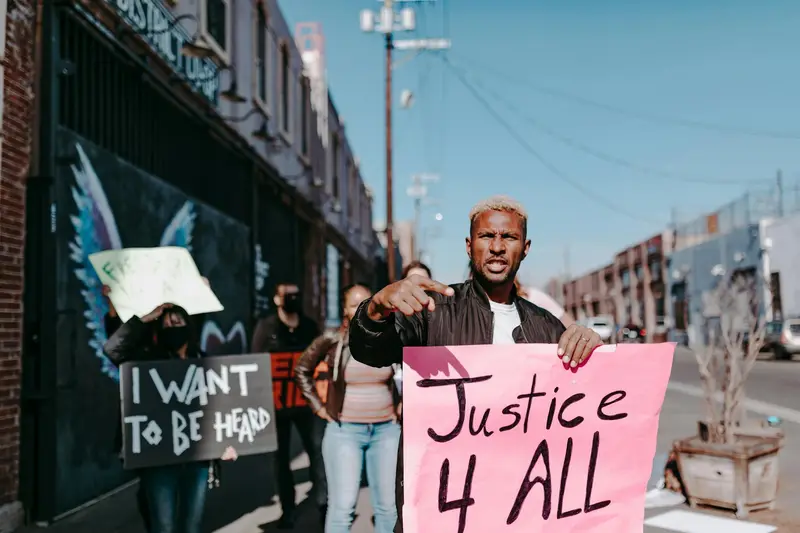
Human Rights Day, December 10, marks the day in 1948 when the UN General Assembly, meeting at the Palais de Chaillot in Paris, adopted the Universal Declaration of Human Rights. No country voted against it, and the six-page text has since become the world’s most translated document, with Guinness World Records counting 370 languages and dialects in 2009.
Origin: The Declaration and the Day
The vote in Paris, 10 December 1948. The UN’s third General Assembly opened at the Palais de Chaillot in Paris in September 1948 (UN Dag Hammarskjöld Library), and a UN photograph dated 10 December 1948 shows French delegate René Cassin addressing the Assembly there “prior to the adoption of the Declaration of Human Rights” (UN Photo). It was adopted at the 183rd plenary meeting as resolution 217 (III), with 48 votes in favour and 8 abstentions (UN Dag Hammarskjöld Library); none voted against (UN).
Who wrote it. The drafting committee was chaired by Eleanor Roosevelt (United States). René Cassin (France) composed the first draft, Charles Malik (Lebanon) was rapporteur, Peng Chung Chang (China) vice-chair, and John Humphrey (Canada), director of the UN’s Human Rights Division, prepared the blueprint (UN). Hansa Mehta of India is widely credited with changing “All men are born free and equal” to “All human beings are born free and equal” in Article 1 (UN).
1950: the day is created. Two years later, on 4 December 1950, resolution 423 (V) invited “all States and interested organizations to adopt 10 December of each year as Human Rights Day,” and asked states to report each year on how they observed it (A/RES/423(V)).
A record translation. Guinness World Records lists the Declaration as the most translated document, at 370 languages and dialects “from Abkhaz to Zulu” as of 2009 (Guinness World Records). The UN now says it is available in 577 languages (UN).
Yearly themes. The UN sets a campaign theme and hashtag each year and publishes them on its Human Rights Day page.
Traditions
- The UN Prize in the Field of Human Rights. Created by the General Assembly in 1966 and first awarded on Human Rights Day 1968, the prize is given about every five years. Past laureates include Eleanor Roosevelt, Nelson Mandela, Jimmy Carter, Malala Yousafzai, Denis Mukwege and the ICRC. The 2023 laureates included Belarus’s Viasna Human Rights Center and Congolese women’s rights activist Julienne Lusenge (UN News).
- Write for Rights. Amnesty International’s letter-writing campaign began in Warsaw in 2001, when a group of friends marked Human Rights Day with a 24-hour letter-writing marathon that produced 2,326 letters. By 2020 it drew 4.5 million letters, tweets and petition signatures, and people still write every December (Amnesty International). Each year’s cases and letter kits are on Amnesty’s Write for Rights page.
- South Africa’s own Human Rights Day, March 21. South Africa keeps a separate national Human Rights Day on 21 March, remembering 21 March 1960, when police at Sharpeville shot dead 69 people protesting the pass laws, many as they fled. The government holds events through March as Human Rights Month (South African Government).
How to Read and Teach One UDHR Article (45 minutes)
The Declaration has 30 articles; taking one and reading it closely works better than skimming all of them. This plan suits a class, a youth group or a family table.
- Choose the article (2 minutes). Article 1 suits young children; Article 19 (expression) or Article 26 (education) works for teenagers and adults.
- Read it aloud twice (3 minutes). Article 19: “Everyone has the right to freedom of opinion and expression; this right includes freedom to hold opinions without interference and to seek, receive and impart information and ideas through any media and regardless of frontiers” (UN).
- Unpack the words (10 minutes). Ask the group to underline the verbs (hold, seek, receive, impart) and say what each one looks like in daily life. Note “everyone”: the article does not say “every citizen.”
- Find it in your own law (10 minutes). Look up the matching clause in your country’s constitution or bill of rights (in the United States, the First Amendment; in South Africa, section 16 of the Constitution) and compare the wording.
- Test it with a case (15 minutes). Use one real case from the current Write for Rights campaign or the news. Ask: which words of the article apply? Who has the duty to respect it?
- Close with one action (5 minutes). Each person writes one sentence in their own words, or one Write for Rights letter.
Tip: the UN’s translations mean you can read the same article in a second language spoken in the room, then compare the two versions.
Messages
- “Thirty articles, one promise: happy Human Rights Day.”
- ““All human beings are born free and equal in dignity and rights.” Article 1, still worth reading aloud.”
- “Today we honour the courage of human rights defenders who risk everything to protect others.”
- “Write for Rights today: one letter can help free someone you’ll never meet.”
- “Human rights are not privileges to be granted; they are inherent rights that belong to every person.”
- “From the vote in Paris on 10 December 1948 to your town today: happy Human Rights Day.”
Quotes
- “All human beings are born free and equal in dignity and rights. – Universal Declaration of Human Rights, Article 1”
- “Where, after all, do universal human rights begin? In small places, close to home—so close and so small that they cannot be seen on any map of the world. – Eleanor Roosevelt”
- “The rights of every man are diminished when the rights of one man are threatened. – John F. Kennedy”
- “Injustice anywhere is a threat to justice everywhere. – Martin Luther King Jr.”
- “We will have to repent in this generation not merely for the hateful words and actions of the bad people but for the appalling silence of the good people. – Martin Luther King Jr.”
- “For to be free is not merely to cast off one’s chains, but to live in a way that respects and enhances the freedom of others. – Nelson Mandela”
- “No one is born hating another person because of the colour of his skin, or his background, or his religion. – Nelson Mandela”
- “Human rights are women’s rights and women’s rights are human rights, once and for all. – Hillary Clinton”
- “Human rights are not a privilege conferred by government. They are every human being’s entitlement by virtue of his humanity. – Attributed to Mother Teresa”
FAQ
When is International Human Rights Day 2026? International Human Rights Day is observed annually on December 10th, making it Thursday, December 10, 2026.
Why is December 10th Human Rights Day? On 10 December 1948 the UN General Assembly adopted the Universal Declaration of Human Rights (resolution 217 (III)) in Paris. Resolution 423 (V) of 4 December 1950 invited all states to mark that date every year.
Where was the Universal Declaration of Human Rights adopted? At the Palais de Chaillot in Paris, where the UN’s third General Assembly met in 1948. The vote was 48 in favour, none against, 8 abstentions.
What is the most translated document in the world? The Universal Declaration of Human Rights. Guinness World Records counted 370 languages and dialects in 2009; the UN now lists 577.
What is the UN Human Rights Prize? An award created by the General Assembly in 1966, first given on Human Rights Day 1968 and presented roughly every five years to people and organisations for outstanding human rights work.
Related Celebrations
As you observe International Human Rights Day, explore our guides for International Day of Peace for conflict resolution, International Womens Day for gender equality, and World Refugee Day for displaced persons. For social justice celebrations, check our International Workers Day and World Kindness Day articles.
Related holidays
June 20
World Refugee Day
December 11
International Mountain Day
December 5
International Volunteer Day
December 5
World Soil Day