
Tuesday, October 5, 2027 · in 330 days
World Teachers' Day: The 1966 Recommendation, Teachers' Days Worldwide & a Thank-You Letter 2027
UNESCO's World Teachers' Day on October 5 marks the 1966 ILO/UNESCO Recommendation concerning the Status of Teachers. What the Recommendation says, how the yearly theme is set, how India, China and Vietnam keep their own teachers' days, how to write a thank-you letter, plus messages and verified quotes.
Updated 6 messages 8 quotes Tap to copy any message
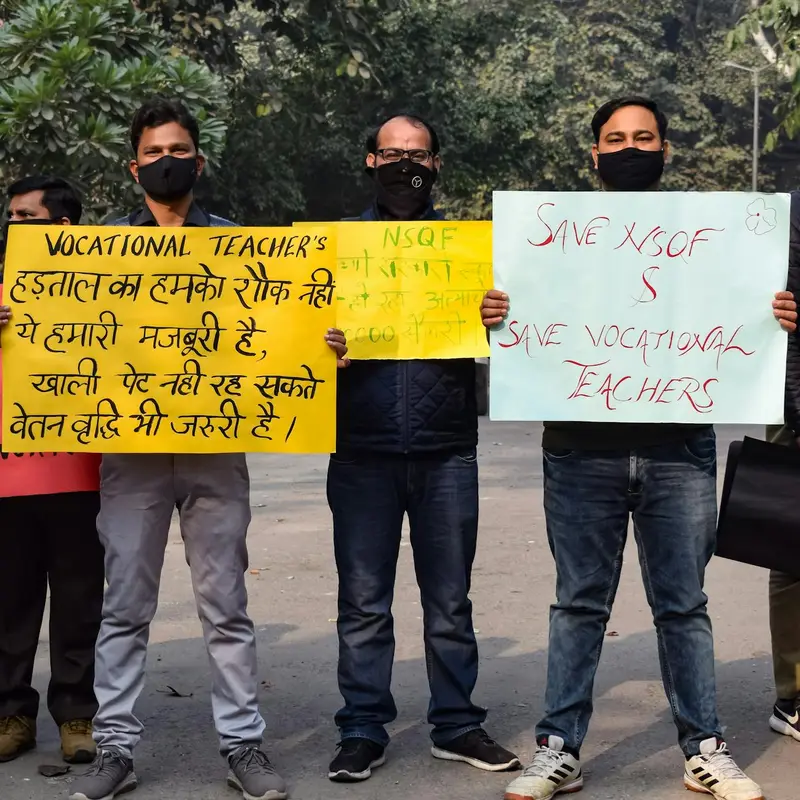
World Teachers’ Day, held every October 5, is UNESCO’s international day for teachers. It is less a thank-you day than an anniversary: on 5 October 1966 an intergovernmental conference in Paris adopted the ILO/UNESCO Recommendation concerning the Status of Teachers, which still sets the international benchmarks for teachers’ pay, training, class sizes and academic freedom.
Origin: The 1966 Recommendation
The Recommendation was adopted on 5 October 1966 by the Special Intergovernmental Conference on the Status of Teachers, convened by UNESCO in Paris in cooperation with the International Labour Organization (full text, ILO/UNESCO). It applies to teachers in public and private schools from nursery and kindergarten up to the end of secondary education, including technical, vocational and art teachers (paragraph 2). Its 146 paragraphs fall into 13 sections. Some of the most concrete:
- Teaching is a profession (para. 6): “a form of public service which requires of teachers expert knowledge and specialized skills, acquired and maintained through rigorous and continuing study.”
- No discrimination (para. 7) in training or employment on grounds of race, colour, sex, religion, political opinion, national or social origin, or economic condition.
- Academic freedom (para. 61): teachers should have “the essential role in the choice and the adaptation of teaching material, the selection of textbooks and the application of teaching methods.”
- Fair assessment (paras. 63–64): inspection should help teachers rather than diminish their freedom, and teachers should have a right to appeal against assessments they consider unjustified.
- Negotiation (paras. 83–84): teachers should be able to negotiate through their organisations, with machinery for settling disputes.
- Class size (para. 86): classes should be small enough “to permit the teacher to give the pupils individual attention.”
- Working hours and leave (paras. 89–95): hours set in consultation with teachers’ organisations, taking account of pupil numbers and preparation and marking time; paid annual holidays and periodic study leave.
- Salaries (para. 115): pay should “compare favourably with salaries paid in other occupations requiring similar or equivalent qualifications.”
- Shortages (paras. 141–145): overlarge classes and unreasonably long hours are not acceptable ways to cover a teacher shortage; better status and conditions are “the best means” of attracting and keeping qualified teachers.
University staff were added by a companion text, the Recommendation concerning the Status of Higher-Education Teaching Personnel, adopted by UNESCO’s General Conference at its 29th session on 11 November 1997. It covers academic freedom to teach, research and publish (paras. 27–29), self-governance and collegiality (paras. 31–32), and tenure as a safeguard against arbitrary decisions (paras. 45–46) (UNESCO).
The Day Since 1994
UNESCO has celebrated World Teachers’ Day since 1994, co-convening it with the ILO, UNICEF and Education International, the global federation of teachers’ unions. The four heads issue a joint message, and UNESCO holds the global celebration at its Paris headquarters, streamed online, where it presents the UNESCO-Hamdan Prize for Teacher Development; the ninth edition went to teacher-development initiatives from Ethiopia, Indonesia and Türkiye. Each year has a theme, published on UNESCO’s page; 2026 marked the Recommendation’s 60th anniversary, and UNESCO has begun revising the Recommendation itself.
Teachers’ Days on Other Dates
Many countries keep their own national teachers’ day, usually tied to a person or a school-year milestone:
- India, September 5. India’s Teachers’ Day honours Dr. Sarvepalli Radhakrishnan, the philosopher and second President of India, born on September 5, 1888. The National Teachers’ Awards, first instituted in 1958, moved to his birthday in the mid-1960s; the President presents them each year with a silver medal, a certificate and a cash prize of Rs 50,000 (Press Information Bureau, Ministry of Education).
- China, September 10. On 21 January 1985 the Standing Committee of the Sixth National People’s Congress fixed September 10 as Teachers’ Day, to promote “respecting teachers and valuing education.” Earlier attempts included June 6 (1931, never officially recognised), August 27, Confucius’s birthday (1939), and May 1 (agreed in 1951 but not implemented) (Visit Beijing).
- Vietnam, November 20. The date comes from the international teachers’ union federation FISE, whose 1957 conference in Warsaw named November 20 the International Day of the Charter of Teachers. Vietnam’s Council of Ministers made it Vietnamese Teachers’ Day by Decision 167-HĐBT on 28 September 1982, and the first nationwide celebration followed that November (Báo Nghệ An).
- United States, May. The US marks Teacher Appreciation Week in the first full week of May, with National Teacher Day on its Tuesday.
How to Write a Thank-You Letter to a Teacher
A letter a teacher keeps does three things a card doesn’t: it is specific, it shows the result, and it reaches them. A structure that works for a current or former teacher:
- Open with who you are and when. “You taught me Year 9 chemistry at Hillside School in the early 2000s; I sat by the window.” Former teachers have hundreds of students, so give them a way to place you.
- Name one specific moment. A comment on an essay, the day they stayed after class, a book they lent you. One concrete scene beats a list of virtues.
- Say what it changed. The subject you went on to study, the habit you kept, the job you do now. This is the part teachers rarely get to hear.
- Thank them plainly. One sentence, without hedging: “Thank you for taking me seriously when I was fourteen.”
- Sign off with your full name and the class or year, and, if you’d like a reply, an email address.
Keep it to one page. If the teacher has moved on, address it to them care of the school office, and time it to arrive on October 5 or on your own country’s teachers’ day.
Messages
- “Happy World Teachers’ Day! Thank you to every teacher who shaped who we are.”
- “To the teacher who changed my life: I’m writing you the letter I should have sent years ago.”
- “Happy Teachers’ Day to teachers everywhere, whether you celebrate on October 5, September 5 or November 20.”
- “Teaching is a profession, and teachers deserve to be treated like professionals. Happy World Teachers’ Day.”
- “To the teachers working in crowded classrooms and difficult places: thank you for showing up.”
- “Happy World Teachers’ Day to the teachers who taught us to ask why.”
Quotes
- “Education is the most powerful weapon we can use to change the world. – Nelson Mandela”
- “Education is one of the blessings of life — and one of its necessities. – Malala Yousafzai”
- “One does not teach a subject, one teaches a student how to learn it. – Jacques Barzun”
- “A secure teacher expects to be a learner all day, every day, and is comfortable with the ambiguity of that role. – Carol Ann Tomlinson”
- “To be a schoolmaster is next to being a king. – Erasmus”
- “The art of teaching is the art of assisting discovery. – Attributed to Mark Van Doren”
- “Teaching kids to count is fine, but teaching them what counts is best. – Attributed to Bob Talbert”
- “Teaching is the profession that teaches all the other professions. – Unknown”
FAQ
When is World Teachers Day 2027? World Teachers Day is observed annually on October 5th, making it Tuesday, October 5, 2027.
Why October 5? It is the anniversary of the adoption of the ILO/UNESCO Recommendation concerning the Status of Teachers in Paris on 5 October 1966.
Who organises World Teachers’ Day? UNESCO, which has held it since 1994, together with the ILO, UNICEF and Education International. The global event takes place at UNESCO headquarters in Paris.
What does the 1966 Recommendation actually say? It sets standards for teachers’ training, employment, academic freedom, class sizes, working hours, salaries and social security, in 146 paragraphs. The 1997 Recommendation extends the same principles to university and other higher-education staff.
What is the World Teachers’ Day theme? UNESCO sets a new theme each year and publishes it on its World Teachers’ Day page.
Why do India, China and Vietnam celebrate on different days? They keep national teachers’ days of their own: India on September 5 for Dr. Sarvepalli Radhakrishnan’s birthday, China on September 10 since 1985, and Vietnam on November 20 since 1982.
Is World Teachers Day the same as Teacher Appreciation Week? No. World Teachers’ Day is an international day on October 5. Teacher Appreciation Week is a US observance in the first full week of May.
Related Celebrations
As you honor World Teachers Day, explore our guides for Teachers Appreciation Week for extended educator recognition, International Literacy Day for learning support, and Back to School for education celebration. For educational support, check our World Book Day and National Mentoring Day articles.
Related holidays

September 8
International Literacy Day
January 15
National Mentoring Day
January 23
National Handwriting Day
Any time
Back to School & First Day