
Tuesday, December 1, 2026 · in 22 days
World AIDS Day: History, Red Ribbon & Messages 2026
World AIDS Day on December 1: how two WHO officers started the first global health day in 1988, UNAIDS themes by year, the red ribbon and the AIDS Memorial Quilt, how to take part, plus messages and verified quotes.
Updated 6 messages 9 quotes Tap to copy any message
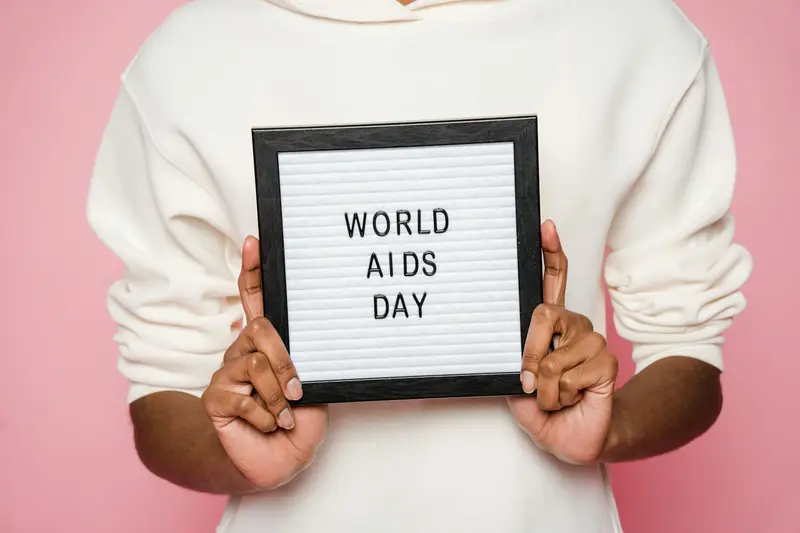
World AIDS Day is observed every year on December 1. It is a day to raise awareness of HIV and AIDS, show solidarity with people living with HIV, and remember those who have died of AIDS-related illnesses. UNAIDS calls it “the first ever international day for global health”, and the World Health Organization describes it as one of the most widely recognised international health days.
History of World AIDS Day
- 1988 – two WHO officers have the idea. World AIDS Day was conceived by James Bunn and Thomas Netter, public information officers at the World Health Organization’s Global Programme on AIDS in Geneva. In a 2011 NPR interview Bunn recalled the fear of the time: “There was a lot that people felt they did not know about the epidemic and they were afraid” (NPR via KPBS).
- December 1, 1988 – the first observance. “Founded in 1988, World AIDS Day was the first ever international day for global health” (UNAIDS). The first observance took place on December 1, 1988 (HIV.gov), and WHO notes the day was “initiated by WHO in 1988” (WHO). Its first theme was “A world united against AIDS”.
- Who runs it today. UNAIDS, the Joint United Nations Programme on HIV/AIDS, leads the global campaign and sets the annual theme, with WHO, governments and community organisations holding their own events.
World AIDS Day Themes
UNAIDS lists every theme since 1988 on its World AIDS Day page. A selection:
| Year | Theme |
|---|---|
| 1988 | A world united against AIDS |
| 1990 | Women and AIDS |
| 1993 | Time to act |
| 1996 | One world, one hope |
| 2001 | I care, do you? |
| 2002–2003 | Stigma and discrimination |
| 2005–2010 | Stop AIDS. Keep the promise (2005–2008); Universal access and human rights (2009–2010) |
| 2011 | Getting to zero |
| 2013 | Zero discrimination |
| 2019 | Communities make the difference |
| 2021 | End inequalities. End AIDS. End pandemics. |
| 2022 | Equalize |
| 2023 | Let communities lead |
| 2024 | Take the rights path |
| 2025 | Overcoming disruption, transforming the AIDS response |
The Red Ribbon
UNAIDS describes the red ribbon as “the universal symbol of awareness of, support for and solidarity with people living with HIV” (UNAIDS). It was created in April and May 1991 by members of the Visual AIDS Artists Caucus in New York, inspired by the yellow ribbons honouring soldiers in the Gulf War. The artists chose to stay anonymous, credit the caucus as a whole and keep the image copyright free “so that no individual or organization would profit from the use of the red ribbon” (Visual AIDS).
Its television debut came in June 1991 at the 45th Tony Awards, where Visual AIDS worked with Broadway Cares/Equity Fights AIDS to pin ribbons on guests and presenters; Jeremy Irons was one of the first presenters to wear it (Visual AIDS). The Museum of Modern Art later added the red ribbon to its design collection, alongside the @ symbol (Visual AIDS).
How to make and wear one the original way. The caucus’s instructions were to cut red ribbon into a 6-inch length and fold it at the top into an inverted “V”, then fix it to a lapel with a safety pin (Visual AIDS). Volunteers made them in batches at “ribbon bees”, which still works for a school, office or club: one metre of ribbon makes about six.
The AIDS Memorial Quilt
The other great symbol of remembrance is the AIDS Memorial Quilt. Activist Cleve Jones conceived it in November 1985, and in June 1987 he, Mike Smith, Gert McMullin and others formally organised the NAMES Project Foundation in San Francisco. Jones made the first panel in memory of his friend Marvin Feldman (National AIDS Memorial – Quilt history).
- October 11, 1987: first shown on the National Mall in Washington, D.C., during the National March on Washington for Lesbian and Gay Rights, with 1,920 panels covering more than a football field (National AIDS Memorial; Histories of the National Mall). Volunteers reading the names aloud became a tradition at later displays.
- 1988 and 1989: displayed on the Ellipse in front of the White House, with 8,288 and then more than 12,000 panels; the founders and the NAMES Project were nominated for the 1989 Nobel Peace Prize.
- 1992 and 1996: back on the Mall; in 1996 the Quilt covered the entire National Mall and an estimated 1.2 million people came to see it.
- 2012: for its 25th anniversary, the entire Quilt was shown on the Mall over two weeks with the Smithsonian Folklife Festival (National AIDS Memorial).
Since November 2019 the National AIDS Memorial has been the Quilt’s permanent caretaker. It now has roughly 50,000 panels honouring more than 110,000 people and weighs about 54 tons.
How to Take Part
- Wear a red ribbon on December 1, made the original way above or from a local HIV charity.
- Use the year’s theme. UNAIDS publishes the theme, a social media banner and statements ahead of December 1; share them with #WorldAIDSDay.
- View the Quilt online. The National AIDS Memorial’s interactive Quilt lets you search a name and see each panel.
- Host a Quilt display. Schools, churches, libraries and community groups can borrow panels through the Community AIDS Quilt Display Program. Hosting carries a fee plus shipping that rises with the number of blocks (current rates are on the request page); the memorial supplies an installation guide and host toolkit (Request the Quilt). Many hosts time a display, and a reading of names, for December 1.
- Make a panel. Panels must be 3 feet by 6 feet with a half-inch border left clear for sewing, built around the name of someone who died of AIDS, using durable non-stretch fabric and no glue or puff paint. Send it with a letter about the person and the panel-maker form (Make a panel).
- Attend a candlelight vigil or memorial, and fundraise for, donate to, or volunteer with an HIV organisation in your community.
- Speak out against stigma and discrimination toward people living with HIV.
Messages
- “Wearing my red ribbon today in memory, in solidarity and in hope.”
- “On World AIDS Day, we remember those we’ve lost and stand with everyone living with HIV.”
- “Standing together against stigma and discrimination: everyone deserves dignity and support.”
- “Reading their names aloud today at the Quilt display, so they are never forgotten.”
- “World AIDS Day reminds us that love, not fear, should guide our response.”
- “To the nurses, activists and volunteers who never left: thank you, on World AIDS Day and always.”
Quotes
- “When the history of our times is written, will we be remembered as the generation that turned our backs in a moment of global crisis or will it be recorded that we did the right thing? – Nelson Mandela”
- “AIDS is no longer just a disease, it is a human rights issue. – Attributed to Nelson Mandela”
- “These children need to feel the same things as other children… To feel loved and nurtured and included by the world they live in, without the stigma that AIDS continues to attract. – Diana, Princess of Wales”
- “HIV doesn’t make people dangerous to know, so you can shake their hands and give them a hug. Heaven knows they need it. – Attributed to Diana, Princess of Wales”
- “I think sometimes we think, ‘Well, only gay people can get it; it’s not going to happen to me,’ and here I am saying that it can happen to anybody. – Magic Johnson”
- “Everyone thought I was going to die like a year later, they didn’t know. So I helped educate sports, and then the world, that a man living with HIV can play basketball. – Magic Johnson”
- “The AIDS crisis is evidence of a world in which nothing important is regional, local, limited; in which everything that can circulate does, and every problem is, or is destined to become, worldwide. – Susan Sontag”
- “AIDS makes things more intensely what they already are. – Mark Doty”
- “We owe it to Ryan to make sure that the fear and ignorance that chased him from his home and his school will be eliminated. We owe it to Ryan to open our hearts and our minds to those with AIDS. – Ronald Reagan”
FAQ
When is World AIDS Day 2026? World AIDS Day is observed annually on December 1st, making it Tuesday, December 1, 2026.
Who established World AIDS Day? The idea came from James Bunn and Thomas Netter, public information officers at WHO’s Global Programme on AIDS. WHO launched it on December 1, 1988, and today UNAIDS leads the global campaign.
What is the significance of the red ribbon? The red ribbon is the universal symbol of awareness of, support for and solidarity with people living with HIV. It was created in 1991 by the Visual AIDS Artists Caucus in New York.
Was World AIDS Day the first global health day? Yes. UNAIDS describes World AIDS Day, founded in 1988, as the first ever international day for global health.
What is the AIDS Memorial Quilt? A memorial of roughly 50,000 fabric panels, each 3 by 6 feet, honouring more than 110,000 people who died of AIDS. Begun by the NAMES Project in San Francisco in 1987 and first shown on the National Mall on October 11, 1987, it is now cared for by the National AIDS Memorial.
How can I take part in World AIDS Day? Wear a red ribbon, share the year’s UNAIDS theme, view or host a display of the AIDS Memorial Quilt, attend a vigil or memorial, and fundraise or volunteer for an HIV organisation in your community.
Related Celebrations
As you observe World AIDS Day, explore our guides for World Health Day for global health awareness. For awareness campaigns, check our World Cancer Day and World Mental Health Day articles.
Related holidays
October 10
World Mental Health Day
February 4
World Cancer Day
November 20
World Children's Day
November 19
International Men's Day