February 8 – March 9, 2027 (expected) · in 91 days
Ramadan: How the Month Is Set, Daily Rhythm, Traditions & Greetings 2027
What the Quran says about the Ramadan fast, how moon sighting sets the start date, the daily rhythm of suhur, iftar and taraweeh, traditions from Istanbul to Cairo and Kuala Lumpur, etiquette for guests and colleagues, plus messages and verses.
Updated 17 messages Tap to copy any message
Ramadan is the ninth month of the Islamic lunar calendar, when adult Muslims who are able fast from dawn until nightfall. The month moves through the seasons, starting earlier every year, and its beginning depends on sighting a thin new crescent moon, so neighbouring communities can start a day apart. The evening meal that breaks each day’s fast, iftar, is now on UNESCO’s list of intangible cultural heritage (UNESCO, decision 18.COM 8.B.19).
Disclaimer: This content is for informational purposes only and does not constitute religious advice. Please consult with Islamic scholars or religious authorities for guidance on religious practices.
Where the Fast Comes From
The obligation comes from the Quran’s second chapter. Al-Baqarah 2:183 says fasting “is prescribed for you, as it was for those before you” (Quran 2:183, Quran.com). Verse 2:185 names the month: “Ramadan is the month in which the Quran was revealed as a guide for humanity” (Quran 2:185, Quran.com). The same passage sets the exemptions: those who are ill or travelling make up the days later, and those who can fast only with great hardship may instead feed a needy person for each day missed (Quran 2:184, Quran.com).
The night the revelation began, Laylat al-Qadr (the Night of Decree), is described in chapter 97 as “better than a thousand months” (Quran 97, Quran.com). No one knows which night it is, but it is held to be one of the last ten nights of Ramadan. Some Muslims spend those nights in i’tikaf, a retreat in the mosque for prayer and Quran reading, while others go for a few hours or keep it at home (BBC Religion).
How the Start Date Is Set
Each Islamic month begins with the sighting of the new crescent, and Muslims do not all follow the same sighting (BBC Religion):
- Local sighting. Some communities wait for the crescent to be seen in their own country, which keeps people in one region together.
- Following Saudi Arabia. Others begin when Saudi Arabia announces a sighting, as a way to unite Muslims worldwide.
- Astronomical calculation. In 2006 the Fiqh Council of North America decided to use astronomical calculations rather than naked-eye sightings. Not all Muslims accept this.
In practice most Muslims rely on news of an official sighting rather than looking at the sky themselves (BBC Religion), so they wait for the announcement from their mosque or national authority on the evening of the 29th of Sha’ban, the month before. If the crescent is not seen, Sha’ban runs to 30 days and the fast begins the day after. Ramadan itself lasts 29 or 30 days, and the same sighting question decides when Eid al-Fitr begins.
The Daily Rhythm
- Suhur (pre-dawn meal). Eating and drinking are allowed “until you see the light of dawn breaking the darkness of night”, and the fast is then completed “until nightfall” (Quran 2:187, Quran.com). Mosques and community groups publish timetables for each city, with the start time (imsak or fajr) and iftar time worked out for that location.
- The fast. No food, drink or sexual relations from dawn until sunset. Many Muslims also make a point of giving up bad habits and adding prayer or Quran reading (BBC Religion).
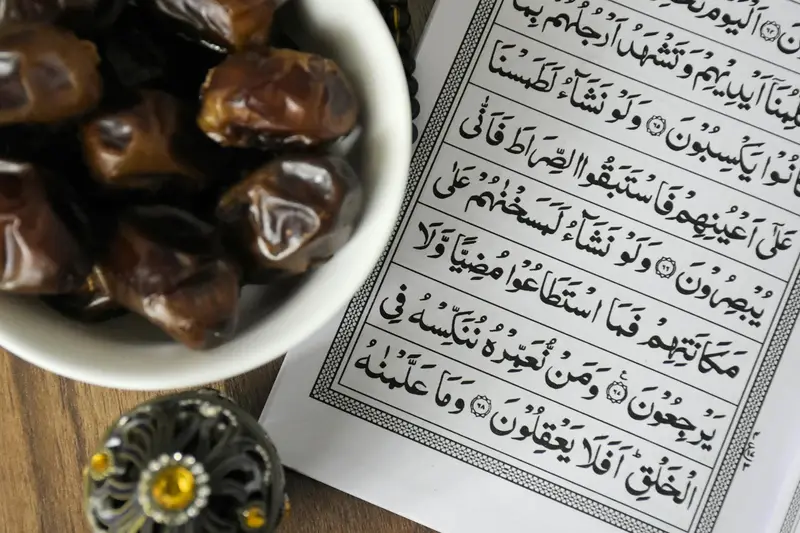
- Iftar. The fast is broken at sunset, often with dates and water, followed by the sunset (maghrib) prayer and a meal. UNESCO describes the evening as a time of prayer, music, storytelling and games that strengthens family and community ties and is joined even by people who are not fasting (UNESCO).
- Taraweeh. These long night prayers are recommended rather than obligatory and usually last an hour and a half to two hours. Most mosques recite one-thirtieth of the Quran each night, completing it over the month (BBC Religion).
Ramadan Traditions Around the World
- Azerbaijan, Iran, Türkiye and Uzbekistan: iftar as heritage. These four countries jointly nominated “Iftar/Eftari/İftar/Iftor and its socio-cultural traditions”, inscribed on UNESCO’s Representative List in 2023. UNESCO notes that the skills are passed on in families, with children helping to prepare parts of the meal (UNESCO).
- Istanbul: the Ramadan drummer. Before dawn, a davulcu walks the streets beating a large double-headed drum to wake people for suhur, sometimes chanting short rhyming verses (mani) under the windows. An Istanbul University music historian dates the custom to the late 19th century and the Ottoman military bands. Around 3,000 drummers cover 961 Istanbul neighbourhoods, and residents traditionally give them a tip at the end of the month (Al-Monitor/AFP).
- Cairo: the fanous. Lanterns hang in homes, shops and ministries through the month. The popular story credits Cairenes who greeted the Fatimid caliph al-Mu’izz with lanterns when he arrived during Ramadan, though historians treat that account with caution. Brass-and-coloured-glass lanterns are still made by family workshops in Islamic Cairo (The National).
- Kuala Lumpur: bubur lambuk. Masjid Jamek Kampung Baru cooks spiced rice porridge from a recipe said to be more than 100 years old. Volunteers start at 3 am, cook 15 pots, and hand out about 3,500 free packets after the afternoon (asr) prayer every day of Ramadan (The Vibes).
Etiquette for Friends, Colleagues and Guests
- Greetings. “Ramadan Mubarak” (blessed Ramadan) and “Ramadan Kareem” (generous Ramadan) are both common.
- At work. Colleagues who are fasting don’t usually expect others to stop eating around them. Morning meetings tend to suit them better than late-afternoon ones, and evening events near sunset clash with iftar. Some colleagues may want time for prayer or leave around Eid al-Fitr.
- If you’re invited to iftar. Arrive a little before sunset. The fast is broken first, often with dates and water, and the hosts may pray maghrib before the main meal. Dates, sweets or fruit make good gifts to bring.
- Giving. Feeding people who are fasting carries special merit (see the Tirmidhi hadith below), so many mosques run free community iftars funded by donations. Giving to one is a welcome gesture.
Heartfelt Ramadan Messages
- “Ramadan Mubarak! May this month bring you closer to Allah and to the people you love.”
- “Ramadan Kareem! Wishing you easy fasts, blessed suhurs and joyful iftars.”
- “May your taraweeh be peaceful and your Laylat al-Qadr full of blessings.”
- “Wishing our Muslim colleagues a blessed Ramadan. Tell us if a later meeting time would help.”
- “May the fanous light your home and the drummer wake you in time for suhur. Ramadan Kareem!”
- “Ramadan Mubarak to my family: here’s to thirty evenings of breaking the fast together.”
- “On the last ten nights, may your prayers be answered and your heart be at peace.”
Inspirational Islamic Quotes
From the Quran
- “O you who have believed, decreed upon you is fasting as it was decreed upon those before you that you may become righteous. – Quran 2:183”
- “The month of Ramadhan [is that] in which was revealed the Qur’an, a guidance for the people and clear proofs of guidance and criterion. – Quran 2:185”
- “And when My servants ask you, [O Muhammad], concerning Me - indeed I am near. I respond to the invocation of the supplicant when he calls upon Me. – Quran 2:186”
- “The Night of Decree is better than a thousand months. – Quran 97:3”
- “Indeed, Allah will not change the condition of a people until they change what is in themselves. – Quran 13:11”
From Hadith
- “Whoever observes fasts during the month of Ramadan out of sincere faith, and hoping to attain Allah’s rewards, then all his past sins will be forgiven. – Sahih al-Bukhari 38”
- “When the month of Ramadan starts, the gates of the heaven are opened and the gates of Hell are closed and the devils are chained. – Sahih al-Bukhari 1899”
- “Whoever does not give up forged speech and evil actions, Allah is not in need of his leaving his food and drink. – Sahih al-Bukhari 1903”
- “Fasting is a shield. – Sahih al-Bukhari 1894”
- “Whoever provides the food for a fasting person to break his fast with, then for him is the same reward as his. – Jami` at-Tirmidhi 807”
FAQ About Ramadan
When is Ramadan 2027? Ramadan 2027 is expected to begin on Monday, February 8, 2027 and end on Tuesday, March 9, 2027. Exact dates depend on moon sighting and may vary by location.
Why does Ramadan start on different days in different countries? Because communities follow different sightings of the new crescent: their own country’s, Saudi Arabia’s, or astronomical calculation, as the Fiqh Council of North America has done since 2006 (BBC Religion). The crescent is not visible everywhere on the same evening, so a one-day difference is normal.
Why does Ramadan move earlier every year? The Islamic calendar follows the moon only, and twelve lunar months are about eleven days shorter than a solar year. Ramadan therefore cycles through every season over roughly 33 years, which changes how long the daylight fast lasts in a given place.
Who is excused from fasting? The Quran excuses people who are ill or travelling, who make up the days later, and allows those who can fast only with great hardship to feed a needy person instead (Quran 2:184). Children are not expected to fast. Questions about individual circumstances are for a local imam or scholar.
What is taraweeh? Extra night prayers held in mosques after the evening prayer during Ramadan. They are not obligatory, and over the month many mosques recite the whole Quran in them (BBC Religion).
How can non-Muslims respectfully acknowledge Ramadan? Say “Ramadan Mubarak”, be flexible with meeting and event times around sunset, accept an iftar invitation if one comes, and avoid assuming every Muslim colleague fasts. Some are exempt for reasons they may not want to share.
How does Ramadan end? With the sighting of the Shawwal crescent and the festival of Eid al-Fitr, which begins with a morning congregational prayer and a charity, zakat al-fitr, paid before it.
Related Celebrations
For more celebration ideas, explore our guides on Eid al-Fitr, Passover, and Diwali.