
September 15 – October 15, 2027 · in 310 days
National Hispanic Heritage Month Celebration 2027
National Hispanic Heritage Month (September 15 to October 15): how it grew from a 1968 week into a month, the independence days behind its dates, and messages and verified quotes to share.
Updated 6 messages 10 quotes Tap to copy any message
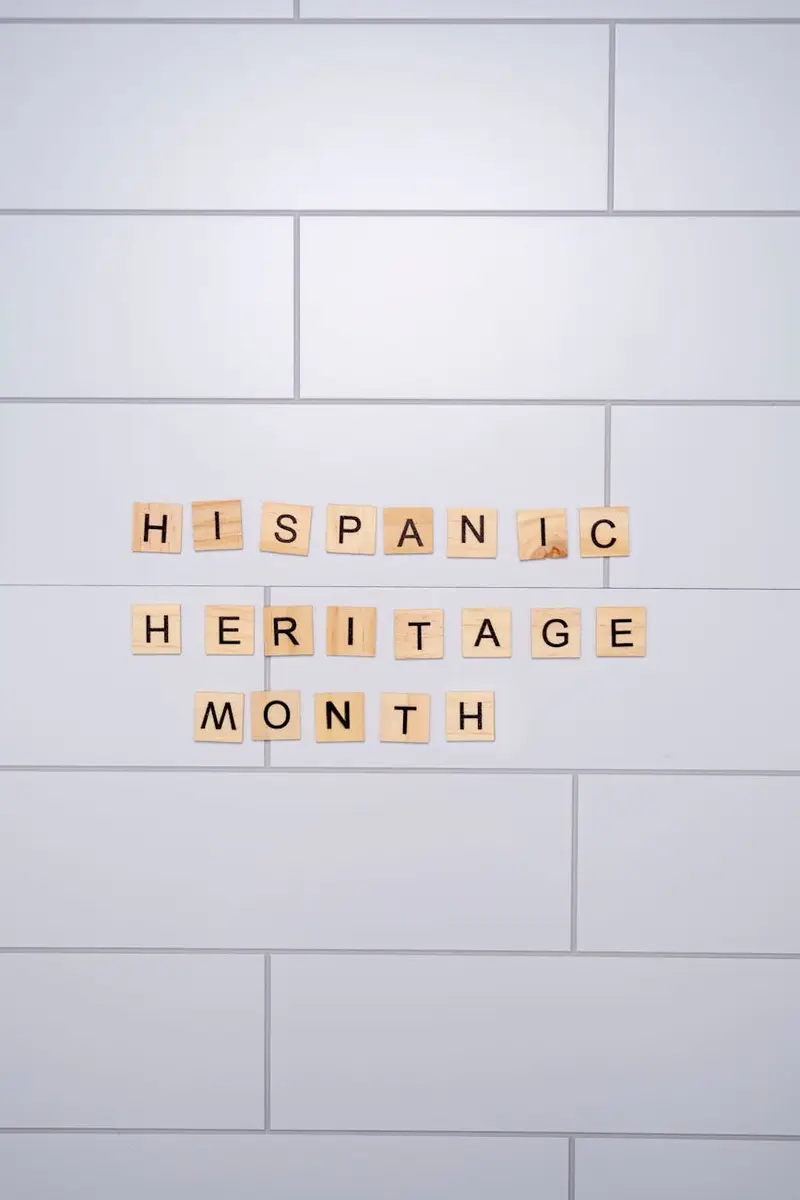
National Hispanic Heritage Month runs from September 15 to October 15 in the United States. It honours the histories, cultures and contributions of Americans whose ancestors came from Spain, Mexico, the Caribbean, and Central and South America. Its unusual mid-month start is deliberate: the window was drawn around a cluster of Latin American independence days.
How Hispanic Heritage Month Began
The observance started as a week. In 1968 Representative George E. Brown of California sponsored H.J. Res. 1299, which authorised the President to proclaim a “National Hispanic Heritage Week” each year around September 15 and 16. President Lyndon B. Johnson signed it as Public Law 90-498 on September 17, 1968, according to the U.S. House of Representatives History, Art & Archives office.
For two decades presidents marked the week with proclamations and receptions. In 1987 Representative Esteban Torres of California introduced a bill to stretch the week into a month so that “the American people [could] learn of our heritage”; it died in committee. A similar Senate bill from Senator Paul Simon of Illinois passed the following year, and President Ronald Reagan signed it on August 17, 1988 (House History). The official federal site describes the result as a 30-day period from September 15 to October 15, enacted as Public Law 100-402.
Why September 15?
September 15 is the anniversary of independence for Costa Rica, El Salvador, Guatemala, Honduras and Nicaragua. Mexico celebrates its independence on September 16 and Chile on September 18, and October 12, Columbus Day or Día de la Raza, also falls within the 30 days (HispanicHeritageMonth.gov). Many communities also mark Indigenous Peoples’ Day on that October Monday.
How the Month Is Celebrated
Because the month opens on several national holidays, some of its best-known traditions are imported directly from those countries’ independence celebrations.
El Grito in Mexico and Mexican-American communities. In the early hours of September 16, 1810, the priest Miguel Hidalgo called his parishioners to revolt by ringing the bell of the parish church in Dolores, Guanajuato. In 1896 President Porfirio Díaz had that bell moved to the main balcony of the National Palace in Mexico City, and since then the celebrations have begun on the night of September 15, when crowds fill the Zócalo for the president’s re-enactment of the “grito” (INAH, Mexico’s National Institute of Anthropology and History).
Lanterns and a torch in Costa Rica. On the evening of September 14, Costa Rican communities sing the national anthem at 6 p.m., then children carry handmade lanterns (faroles) through their neighbourhoods in the desfile de faroles. The custom was started in 1953 by educator Víctor Manuel Ureña Arguedas in San José. A student torch relay, the Antorcha Centroamericana de la Libertad, runs through Central America and ends in Cartago, Costa Rica’s colonial capital (The Tico Times).
The Hispanic Heritage Awards. In the U.S. the month’s best-known national event is the Hispanic Heritage Awards, established by the White House in 1988 alongside the month itself. The ceremony airs nationally on PBS (the 37th edition, in 2024, was held in the Kennedy Center Opera House in Washington, D.C.) and honours Latino leaders in fields from education and business to the arts (Hispanic Heritage Foundation).
How to Make Papel Picado
Papel picado (“perforated paper”) banners hang over streets and patios at Mexican fiestas, and they are an easy project for a classroom, office or family celebration during the month. This makes a banner of 10 flags about 3 m (10 ft) long.
You need: 10 sheets of tissue paper in mixed colours (about 50 × 70 cm / 20 × 28 in), sharp scissors, a ruler, a pencil, 3.5 m (12 ft) of string or thin twine, and a glue stick.
- Cut the sheets to size. Fold each tissue sheet in half and cut along the fold to get two rectangles of about 35 × 50 cm. Use one rectangle per flag.
- Make the top hem. Fold the top long edge of each rectangle down by 2 cm (¾ in). This sleeve will hold the string, so don’t cut into it in the later steps.
- Fold to cut. With the hem folded out of the way, fold the rest of the rectangle in half from left to right, then in half again from top to bottom. You now have a small, four-layer block.
- Cut the pattern. Snip small triangles, half-circles and diamonds along the folded edges, and cut a scalloped or zigzag line along the bottom open edge. Cut through all layers at once, keeping each cut at least 1 cm away from the next so the paper stays strong. Work in batches of two or three flags stacked together for speed.
- Unfold carefully. Open each flag slowly and flatten it under a book for a few minutes.
- String the banner. Lay the string along the inside of each hem, run a thin line of glue along the edge of the paper, and fold the hem back over the string. Leave about 5 cm (2 in) between flags and 25 cm (10 in) of bare string at each end for tying.
- Hang it across a doorway, window or fence. Indoors it lasts all month; outdoors, keep it out of rain, since tissue paper tears when wet.
Messages
- “¡Feliz Mes de la Herencia Hispana! Honoring Latino contributions to our shared American story.”
- “From September 15 to October 15: a month that opens on the independence day of five Central American nations.”
- “¡Viva México! Joining every community shouting the Grito this September.”
- “Hanging papel picado and honoring the families who brought their traditions here.”
- “Happy Hispanic Heritage Month! Celebrating the languages, foods, music and art that make America más rico.”
- “To the Costa Rican kids walking the lantern parade tonight: ¡feliz día de la independencia!”
Quotes
- “You cannot uneducate the person who has learned to read. You cannot humiliate the person who feels pride. You cannot oppress the people who are not afraid anymore. – César Chávez”
- “We can do it. I can do it. Sí se puede. – Dolores Huerta”
- “If you have an opportunity to accomplish something that will make things better for someone coming behind you, and you don’t do that, you are wasting your time on this earth. – Roberto Clemente”
- “What I say to my gente is to hang on, and to remember who they are, be proud of who they are, and keep talking. – Rita Moreno”
- “My message is always felicidad - happiness. – Celia Cruz”
- “Until we get equality in education, we won’t have an equal society. – Sonia Sotomayor”
- “History, I was learning, is the story we tell ourselves about what really happened. – Julia Alvarez”
- “Language is much better than throwing stones; language is much, much stronger. – Sandra Cisneros”
- “In diversity there is beauty and there is strength. – Attributed to Maya Angelou”
- “Heritage is our legacy from the past, what we live with today, and what we pass on to future generations. – UNESCO World Heritage Centre”
FAQ
When is National Hispanic Heritage Month 2027? National Hispanic Heritage Month runs from September 15 to October 15 each year. In 2027 it starts on Wednesday, September 15, 2027.
Why does Hispanic Heritage Month start on September 15th? September 15 is the independence day of Costa Rica, El Salvador, Guatemala, Honduras and Nicaragua. Mexico’s (September 16) and Chile’s (September 18) independence days follow within days.
Who created Hispanic Heritage Month? It began as Hispanic Heritage Week, sponsored by Rep. George E. Brown and signed by President Lyndon B. Johnson in 1968. A bill introduced by Sen. Paul Simon expanded it to a month, and President Ronald Reagan signed it on August 17, 1988.
What’s the difference between Hispanic and Latino? “Hispanic” usually refers to people with roots in Spanish-speaking countries, while “Latino” refers to people with roots in Latin America. The two overlap but aren’t identical: Brazilians are Latino but not Hispanic, and Spaniards are Hispanic but not Latino. Many people use both terms, and some prefer one.
Related Celebrations
As you celebrate National Hispanic Heritage Month, explore our guides for Cinco de Mayo for Mexican celebration, International Womens Day for diversity appreciation, and Day of the Dead for cultural traditions. For multicultural celebrations, check our Black History Month and International Dance Day articles.
Related holidays
August 13
International Left Handers Day
September 15
Mid-Autumn Festival: History, Traditions
September 12
Grandparents Day
September 18
Oktoberfest History, Traditions