
Thursday, February 11, 2027 · in 94 days
International Day of Women and Girls in Science: History & Event Ideas 2027
The February 11 UN day created by UN resolution 70/212, how UNESCO and UN Women run it, the yearly Assembly, a ready-to-run classroom activity on Nobel laureates, plus messages and quotes.
Updated 6 messages 9 quotes Tap to copy any message
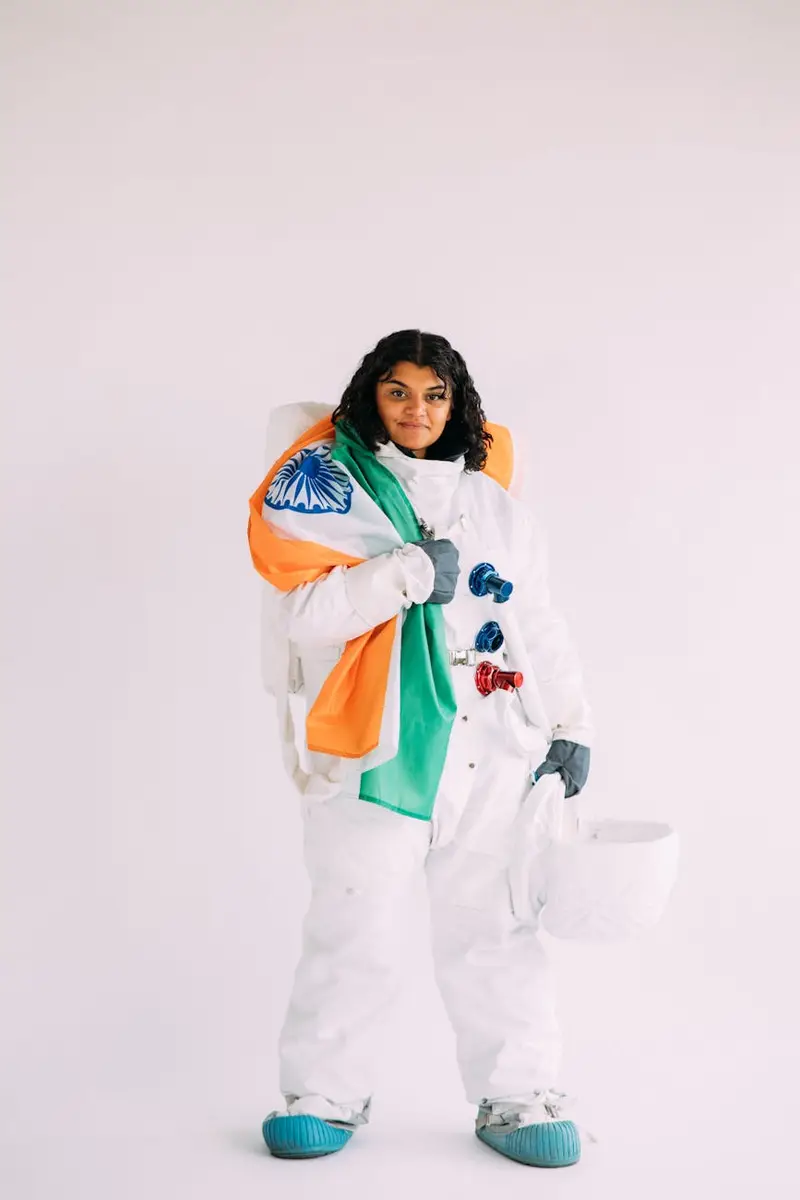
The International Day of Women and Girls in Science is held every February 11. The UN General Assembly created it on 22 December 2015, and the resolution asks UNESCO and UN Women to run it together. It exists because, by UNESCO’s count, women still make up only about one in three of the world’s researchers (UNESCO).
Origin: Resolution 70/212
The General Assembly proclaimed the day in resolution 70/212, adopted at its 81st plenary meeting on 22 December 2015. Its operative paragraphs:
- Paragraph 1 “Decides to proclaim 11 February of each year the International Day of Women and Girls in Science.”
- Paragraph 2 invites governments, the UN system, the private sector, academia, civil society and individuals to observe it “through education and public awareness-raising activities”, including school curricula that encourage girls into science, career development for women scientists, and recognition of their achievements.
- Paragraph 3 invites the United Nations Educational, Scientific and Cultural Organization and UN-Women “to work together to facilitate the implementation of the International Day.”
- Paragraph 4 says the cost of all activities arising from the resolution should be met from voluntary contributions.
The resolution builds on an earlier one, 68/220 of December 2013, which recognised that full and equal access to science, technology and innovation for women and girls “is imperative for achieving gender equality” (resolution 70/212).
Who proposed it. Greece’s mission to the UN credits the initiative to Princess Nisreen El-Hashemite of Iraq, Executive Director of the Royal Academy of Science International Trust (RASIT) (Greek Ministry of Foreign Affairs). In a 2017 interview with UN News she called the day the “best present” ever given to women in the field (UN News).
How the Day Is Marked
- The Assembly at UN Headquarters. Each year an International Day of Women and Girls in Science Assembly is held at the UN in New York, with its own theme; the 9th, in February 2024, took “Women and Girls in Science Leadership for Peace and Development” (Greek Ministry of Foreign Affairs).
- UNESCO in Paris. UNESCO holds its own event at its headquarters on or around 11 February, often hybrid so schools and labs can follow online. UNESCO’s day page and the UN’s observance page publish each year’s theme and programme.
- Online. UNESCO asks people to post what would change if more women were involved in science, using #EveryVoiceInScience, and runs a LinkedIn group, “Advancing Gender Equality in Science” (UNESCO).
The gap the day targets. UNESCO gives these figures on its page for the day: one in three researchers worldwide is a woman, and fewer than one in ten in some countries; 35% of STEM graduates are women; and one in ten STEM leaders is a woman (UNESCO).
A Classroom Activity: Match the Laureate (45 minutes, ages 11–16)
Women have received only a small share of Nobel Prizes since 1901; the Nobel Prize site keeps the current list. Marie Curie won twice, in Physics in 1903 and Chemistry in 1911 (Nobel Prize). This activity uses the official prize citations.
Prepare (15 minutes, the day before). Print two sets of cards. Set A has a name and year; set B has the matching citation, from the Nobel Prize list:
| Laureate | Prize | Citation (card B) |
|---|---|---|
| Marie Curie | Chemistry 1911 | ”for the discovery of the elements radium and polonium” (shortened) |
| Dorothy Crowfoot Hodgkin | Chemistry 1964 | ”for her determinations by X-ray techniques of the structures of important biochemical substances” |
| Barbara McClintock | Medicine 1983 | ”for her discovery of mobile genetic elements” |
| Tu Youyou | Medicine 2015 | ”for her discoveries concerning a novel therapy against Malaria” |
| Frances H. Arnold | Chemistry 2018 | ”for the directed evolution of enzymes” |
| Donna Strickland | Physics 2018 | ”for their method of generating high-intensity, ultra-short optical pulses” |
| Andrea Ghez | Physics 2020 | ”for the discovery of a supermassive compact object at the centre of our galaxy” |
| Emmanuelle Charpentier and Jennifer A. Doudna | Chemistry 2020 | ”for the development of a method for genome editing” |
| Katalin Karikó | Medicine 2023 | discoveries “that enabled the development of effective mRNA vaccines against COVID-19” |
| Anne L’Huillier | Physics 2023 | ”for experimental methods that generate attosecond pulses of light” (shortened) |
Run it.
- Warm-up (5 minutes): ask the class to name as many scientists as they can in one minute, and count how many are women.
- Match (15 minutes): in groups of three or four, students match each name to its citation. Allow phones only to look up unknown words.
- Explain (15 minutes): each group takes one laureate and explains her discovery in a single sentence a 10-year-old would understand.
- Wrap-up (10 minutes): read paragraph 1 of resolution 70/212 aloud, then repeat the warm-up count. Post the class’s one-sentence explanations with #EveryVoiceInScience if your school allows it.
Messages
- “Happy Women in Science Day to the mentors who inspire the next generation of female scientists.”
- “From Marie Curie to modern researchers, women scientists continue to change the world.”
- “Every girl deserves to see herself as a potential scientist. Happy February 11!”
- “To the women in our lab: thank you for the questions you ask and the answers you find.”
- “Today, read one Nobel citation for a woman scientist you’d never heard of, and share it.”
- “Here’s to the first woman in your family to study science, and to all the ones who’ll follow her.”
Quotes
- “One never notices what has been done; one can only see what remains to be done. – Marie Curie”
- “You cannot hope to build a better world without improving the individuals. – Marie Curie”
- “In science, we must be interested in things, not in persons. – Marie Curie”
- “Science and everyday life cannot and should not be separated. – Rosalind Franklin”
- “It is shameful that there are so few women in science. – Chien-Shiung Wu”
- “Science is competitive, aggressive, demanding. It is also imaginative, inspiring, uplifting. – Vera Rubin”
- “Never be limited by other people’s limited imaginations. – Mae Jemison”
- “Girls are capable of doing everything men are capable of doing. Sometimes they have more imagination than men. – Attributed to Katherine Johnson”
- “Science is not a boy’s game, it’s not a girl’s game. It’s everyone’s game. – Attributed to Nichelle Nichols”
FAQ
When is International Women in Science Day 2027? International Day of Women and Girls in Science is observed annually on February 11th, making it Thursday, February 11, 2027.
Who established this international day? The UN General Assembly, in resolution 70/212 of 22 December 2015, which proclaimed February 11 of each year as the International Day of Women and Girls in Science.
Who organises it? The resolution invites UNESCO and UN Women to work together to implement it. An annual Assembly is also held at UN Headquarters in New York; the 9th was in February 2024 (Greek Ministry of Foreign Affairs).
Is there a theme each year? Yes. UNESCO publishes each year’s theme on its day page, usually by January.
How many women have won a Nobel Prize? Far fewer than men; the Nobel Prize site keeps an up-to-date list of every prize awarded to a woman, and Marie Curie appears on it twice (Nobel Prize).
How can I take part? Run an event or lesson around February 11 (the activity above takes 45 minutes), post with #EveryVoiceInScience, or follow the UNESCO and UN events online.
Related Celebrations
As you celebrate International Women in Science Day, explore our guides for International Womens Day for gender equality, National Science Day for scientific appreciation, and National Inventors Day for innovation recognition. For education celebrations, check our International Literacy Day and Teachers Appreciation Week articles.
Related holidays
February 28
National Science Day
March 14
Pi Day
February 11
National Inventors Day
February 9
Mardi Gras History, King Cake Recipe