
Saturday, February 13, 2027 · in 96 days
World Radio Day: UNESCO Origins, Yearly Themes & How to Make a Radio Segment 2027
World Radio Day on February 13: why the date marks the founding of UN Radio, UNESCO's proclamation and the UN endorsement, every yearly theme, how stations mark it, a step-by-step guide to making a three-minute community radio segment, plus messages and verified quotes.
Updated 6 messages 8 quotes Tap to copy any message
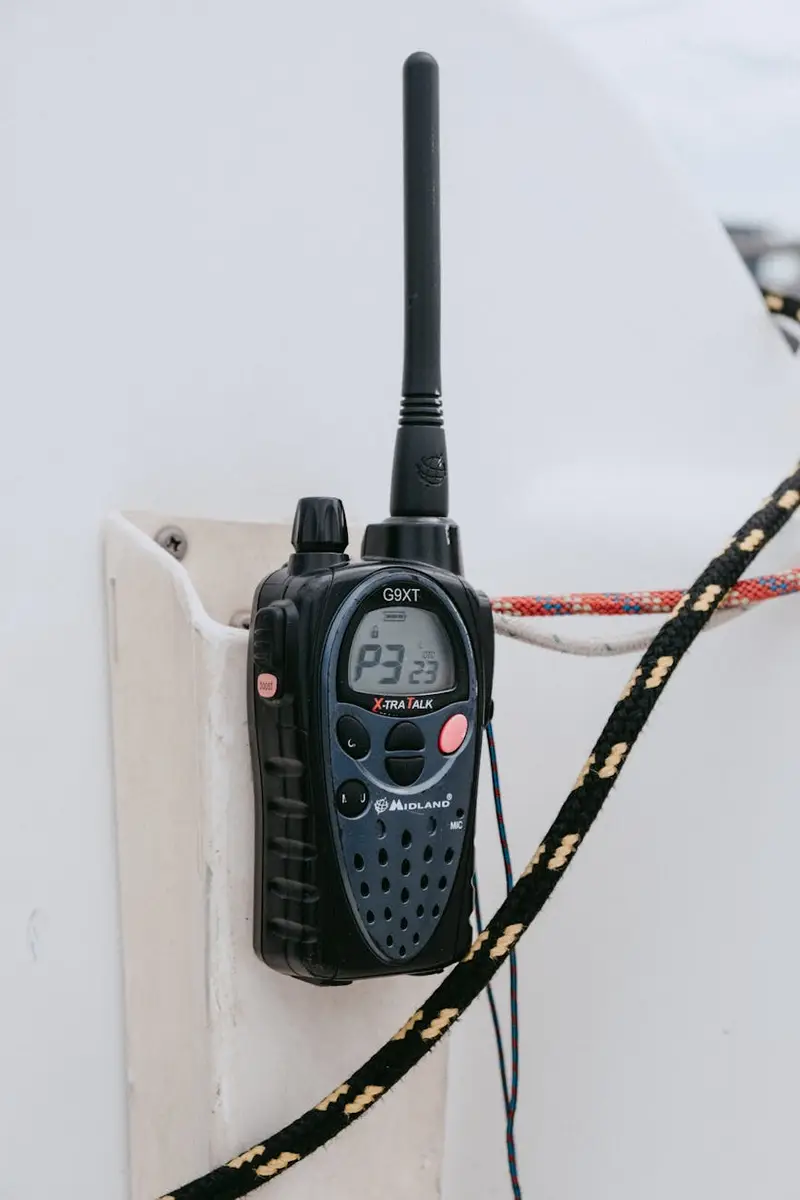
World Radio Day is celebrated every February 13, the anniversary of the day United Nations Radio was established in 1946. UNESCO proclaimed the day in 2011, the UN General Assembly endorsed it in 2012, and each year UNESCO gives it a theme, from sport to climate change to artificial intelligence.
Origin: UN Radio, UNESCO and the General Assembly
Why February 13. The date marks the day “United Nations Radio was established in 1946” (United Nations). UN News described the first World Radio Day, in February 2012, as marking “the anniversary of UN Radio, which was launched in 1946” (UN News).
Proclamation and endorsement. UNESCO’s Member States proclaimed World Radio Day in 2011 (UNESCO). On 18 December 2012 the UN General Assembly, in resolution A/RES/67/124, endorsed “the resolution adopted by the General Conference of the United Nations Educational, Scientific and Cultural Organization at its thirty-sixth session, proclaiming 13 February, the day United Nations Radio was established in 1946, as World Radio Day.”
UNESCO frames the day as a thank-you to broadcasters for the news they deliver, the voices they amplify and the stories they share (UNESCO).
The Yearly Themes
UNESCO lists a theme for each edition since 2013 (UNESCO, past editions):
- 2013: Radio in the First Half of the 20th Century
- 2014: Radio and Gender Equality
- 2015: Youth and Radio
- 2016: Radio in Times of Emergency and Disaster
- 2017: Radio is You
- 2018: Radio and Sports
- 2019: Dialogue, Tolerance and Peace
- 2020: We are Diversity, We are Radio
- 2021: New World, New Radio
- 2022: Radio and Trust
- 2023: Radio and Peace
- 2024: Radio: A century informing, entertaining and educating
- 2025: Radio and Climate Change
Recent editions have tackled subjects such as radio and artificial intelligence (2026). Each year’s focus is posted on UNESCO’s World Radio Day page in the weeks before February 13.
How Stations Mark the Day
- Twinning stations. UNESCO encourages stations to connect with a station in another town or country, exchange programmes, guests and sound archives, consider a longer partnership beyond February 13, find partners on its online map and post with #WorldRadioDay (UNESCO).
- Thirteen ideas. For the AI edition, UNESCO published 13 ideas for broadcasters, including telling listeners clearly when a voice is synthesised, using transcription to open up station archives, and running lightweight local tools for community stations on modest equipment (UNESCO).
- India: a second radio day in July. India also marks National Broadcasting Day on July 23, recalling the first broadcast from the Bombay station in 1927 by the private Indian Broadcasting Company. The state service became All India Radio on 8 June 1936 and took the name Akashvani in 1956 (All India Radio News).
- UN Radio’s own archive. The UN Audiovisual Library’s “UN Radio Classics” collection holds documentaries and dramas from the second half of the 20th century, some starring Audrey Hepburn and Kirk Douglas, a good listen on the day itself (United Nations).
How to Make a Three-Minute Community Radio Segment
A short segment is a good World Radio Day project for a school, a club or a local station’s community slot. The writing rules below come from Media Helping Media, a journalism training resource hosted by the Fojo Media Institute at Linnaeus University in Sweden (Media Helping Media).
1. Pick one story (day 1). One local person, place or event, ideally linked to the year’s theme. Three minutes is room for one idea, not three.
2. Record one interview (day 2–3).
- Use a phone voice-recorder app in a quiet room with soft furnishings; hold the phone about a hand-span from the speaker’s mouth.
- Record 20 seconds of the room’s silence too, for smoothing edits.
- Ask open questions (“What happened when…?”, “What did that feel like?”) and aim for 10–15 minutes of tape.
- Get the speaker’s permission to broadcast, and check their name and title.
3. Pick your clips. Choose two or three clips of 20–40 seconds each, about 90 seconds of interview in total.
4. Write the script around the clips. Following Media Helping Media’s guidance:
- Put the most important point first; the opening line should say what the story is about.
- Use simple words and short sentences; listeners hear them only once.
- Write in the active voice (“the council closed the library”, not “the library was closed”).
- Say the title before the name: “Head teacher Maria Lopez”, so listeners know who is coming.
- Round numbers: “nearly two thousand people”, not “1,988”.
- Use only commas and full stops, and add phonetic spellings in brackets for hard names.
5. Time it. A rough layout for three minutes:
- 0:00–0:20 intro: who, what and why it matters
- 0:20–0:50 clip 1
- 0:50–1:20 link script
- 1:20–2:00 clip 2
- 2:00–2:30 link script or clip 3
- 2:30–3:00 wrap-up and sign-off (“For World Radio Day, I’m…”)
Read your script aloud with a stopwatch and cut until it fits. Media Helping Media recommends reading it out before you finish, to catch tongue-twisters and sentences too long for one breath.
6. Edit and deliver. A free audio editor such as Audacity is enough. Normalise the volume so clips and voice match, then export as a WAV or high-quality MP3 for the station, or upload to your school or club’s channel tagged #WorldRadioDay.
Messages
- “Happy World Radio Day! Tune in to your local station and thank the people behind the microphone.”
- “Three minutes, one story, one voice: make your first radio segment today.”
- “To community radio volunteers who keep the station on air: thank you.”
- “From UN Radio in 1946 to the station on your kitchen windowsill: happy World Radio Day.”
- “Radio reaches the places the internet doesn’t. Happy World Radio Day!”
- “Request a song for someone you love today. Happy World Radio Day!”
Quotes
- “Radio affects most people intimately, person-to-person, offering a world of unspoken communication between writer-speaker and the listener. – Marshall McLuhan”
- “Even more than telephone or telegraph, radio is that extension of the central nervous system that is matched only by human speech itself. – Marshall McLuhan”
- “Of the untold values of the radio, one is the great intimacy it has brought among our people. – Herbert Hoover”
- “Radio news is bearable. This is due to the fact that while the news is being broadcast the disc jockey is not allowed to talk. – Fran Lebowitz”
- “For many people in the future, radio will take the place of an inner life. – Georges Duhamel”
- “Radio is the theater of the mind; television is the theater of the mindless. – Attributed to Steve Allen”
- “Radio is the most intimate and socially personal medium in the world. – Attributed to Harry von Zell”
- “Radio is such a perfect medium for the transmission of poetry. – Attributed to Michael Silverblatt”
FAQ
When is World Radio Day 2027? World Radio Day is observed annually on February 13th, making it Saturday, February 13, 2027.
Who established World Radio Day? UNESCO’s Member States proclaimed it at the 36th session of UNESCO’s General Conference in 2011, and the UN General Assembly endorsed it in resolution A/RES/67/124 on 18 December 2012 (United Nations).
Why is World Radio Day on February 13? It is the anniversary of the establishment of United Nations Radio on 13 February 1946 (United Nations).
When was the first World Radio Day? February 2012, according to UN News coverage at the time (UN News).
Does World Radio Day have a theme? Yes. UNESCO sets one each year; past themes include “Radio and Sports” (2018), “Radio and Trust” (2022) and “Radio and Climate Change” (2025) (UNESCO).
How can a station take part? UNESCO suggests twinning with a station elsewhere, exchanging programmes, guests and archives, and using #WorldRadioDay (UNESCO). Individuals can make a short segment for a community station using the steps above.
Related Celebrations
As you celebrate World Radio Day, explore our guides for World Photography Day for media appreciation, International Literacy Day for communication skills, and World Computer Literacy Day for digital skills. For more celebrations, check our National Technology Day and World Book Day articles.
Related holidays

February 14
Super Bowl Sunday
February 11
International Day
February 11
National Inventors Day
February 9
Mardi Gras History, King Cake Recipe