On or near a girl’s 15th birthday
Quinceañera: History, Traditions and Guest Etiquette 2026
Where the quinceañera comes from, the official US Catholic blessing, the court, padrinos, last doll and shoe ceremony, Cuba's quince photo shoots, and what guests should know, plus messages and quotes.
Updated 6 messages 9 quotes Tap to copy any message
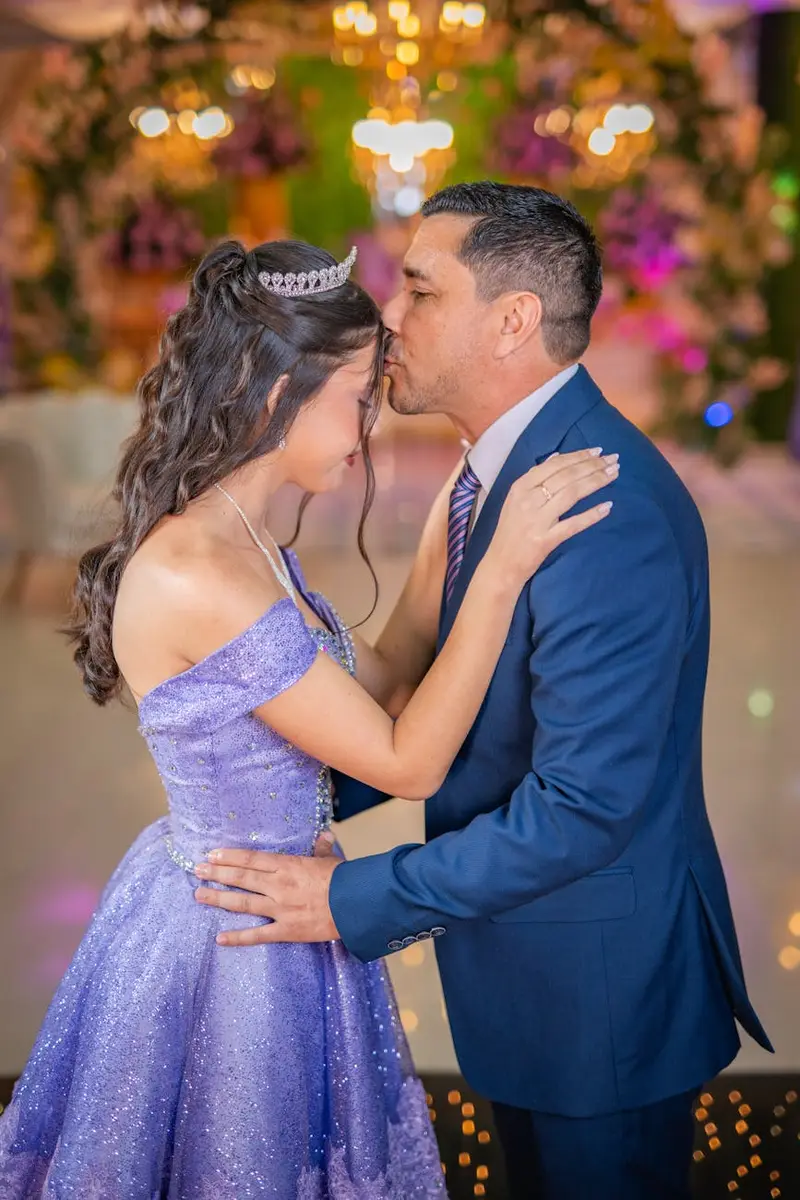
A quinceañera (from quince años, “fifteen years”) celebrates a girl’s 15th birthday as her passage from childhood to young womanhood, usually with a Mass or blessing followed by a party. It is common across Mexico, Central and South America and the Caribbean, and among Hispanic families in the United States. Since 2007 the Catholic Church in the US has had an official rite for it, the Bendición al cumplir quince años (Archdiocese of San Antonio).
Origin: A Blend of Sources
The quinceañera has no single founder, and its exact origins are debated. Two strands are usually cited:
- Indigenous and Iberian rites of passage. Guidance from the Archdiocese of San Antonio, adapted from a USCCB committee text, says “the Native Americans of Meso-America celebrated elaborate rites of passage for their young men and women,” that such rites “are known to have existed in Spain and Portugal as well,” and that “the Spanish brought the practice to the Americas,” where missionaries may have accepted it because it “closely paralleled Christian practices of initiation and marriage” (Archdiocese of San Antonio).
- European court presentations. Folklorist Norma Cantú of Trinity University, who has studied the custom, points to “European court presentations, cotillions, coming out parties,” and notes that “in Mexico, during the colonial period and even up through contemporary times, the age of 15 is when the young woman was considered of age to be married” (ABC13 Houston).
A correction. Many websites, including an earlier version of this page, say the quinceañera “originated in Mexico.” The sources above describe a mix of Mesoamerican, Spanish and European influences, practised in many Spanish-speaking countries, rather than a Mexican invention.
The 2007 Catholic rite. For years, US parishes improvised. The San Antonio guidance notes that unapproved “rituals” of many origins were in use and celebrants “often spontaneously created prayers.” The US bishops approved the Order for the Blessing on the Fifteenth Birthday on 15 November 2004, and the Vatican confirmed it on 10 July 2007. It may be celebrated within Mass or outside it, by a priest or deacon (USCCB decree and rite, via Diocese of Fort Worth). It is a blessing, not a sacrament (Archdiocese of San Antonio).
What Happens at the Mass or Blessing
Under the US rite (Diocese of Fort Worth):
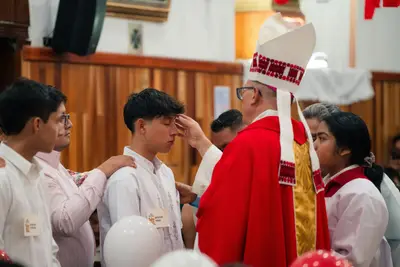
- Procession. The quinceañera enters with her parents, godparents and, often, her court of damas and chambelanes (Archdiocese of San Antonio).
- Readings and homily. The readings may be “In Thanksgiving.” In the blessing outside Mass, the suggested reading is Jeremiah 1:4–10, which the quinceañera herself may read.
- Act of thanksgiving. She prays aloud, thanking God “for the gift of life” and saying “yes” to God’s will, and dedicates herself to Mary.
- Holy water and flowers. The priest may sprinkle her with holy water, and she may take a bouquet to the image of the Virgin Mary.
- Gifts. Baptismal godparents and other sponsoring couples bring forward blessed religious objects, “such as a medal, a Bible, a rosary.”
- Blessing. The priest prays that she may “grow in wisdom, knowledge, and grace,” and the service may end with the Magnificat.
The Fiesta: Traditions and Regional Variations
- Padrinos and madrinas. Sponsors are central. Cantú calls the event “a community-wide investment in this young person,” in which padrinos and madrinas help “make the party and the event happen” (ABC13). The San Antonio guidance notes that relatives who are seamstresses, musicians, florists, cooks, bakers or photographers “often donate their services as gifts” (Archdiocese of San Antonio). A Mexican American family interviewed for the USC Folklore Archives described each sponsoring couple covering one item, “the limousine, another for the cake” (USC Folklore Archives).
- The last doll. The quinceañera is given, and then gives away, a final doll, traditionally dressed to match her gown. One Houston dress shop owner told ABC13 that “now, the trend is a teddy bear” (ABC13).
- The changing of the shoes. She starts the evening in flats, and her father changes them for heels “symbolizing her development from a little girl into a woman.” A father–daughter dance follows, and then he hands her to her chambelán (USC Folklore Archives).
- The court’s dances. The court rehearses for months: a formal waltz, then a baile sorpresa (surprise dance), often salsa or cumbia (USC Folklore Archives).
- Cuba: the photo shoot. In Cuba the quince often centres on a professional photo session against Havana backdrops, with a ride in a classic American car and several outfit changes. In 2015 AP reported Havana studio packages starting at around $150, compared with about $1,000 for similar services in the US, and photographed girls who had emigrated returning to celebrate with relatives on the island (AP via Fox News).
Guest Etiquette: What to Expect
Two parts, one long day. There is usually a church ceremony of about an hour, followed by a party that can last many hours (USC Folklore Archives). One Houston dress-shop owner notes the quinceañera may be in her gown “for the whole 12 to 15 hours of the day” (ABC13).
What to wear. Dress for church first: smart, modest clothes for the Mass that work for an evening reception too. Her gown is traditionally white, though pastel and other colours are now common (USC Folklore Archives), so avoid anything that competes with it.
During the Mass. Non-Catholic guests follow the usual Communion guidelines: other Christians “are ordinarily not admitted,” and all are invited to pray (USCCB).
If you are asked to be a padrino or madrina. Typically each sponsoring couple pays for one part of the day (USC Folklore Archives). Godparents and sponsors who give the blessed religious objects present them during the Mass (Diocese of Fort Worth).
Gifts. Religious gifts (a medal, Bible or rosary) are given during the Mass by sponsors. For other guests, a card or gift brought to the reception is appropriate.
Messages
- “¡Feliz quince! May your fifteenth year be full of blessings and joy.”
- “Felicidades on your quinceañera! You looked radiant at Mass and danced beautifully at the fiesta.”
- “To the padrinos who helped make this day possible: thank you for your love and generosity.”
- “From flats to heels, from girl to young woman: congratulations, quinceañera!”
- “May the blessing you received at Mass today go with you always. ¡Felicidades!”
- “Your vals with your father made the whole room cry. Happy fifteenth!”
Quotes
- “I’m not afraid of storms, for I’m learning how to sail my ship. – Louisa May Alcott”
- “Tell me, what is it you plan to do with your one wild and precious life? – Mary Oliver”
- “Though she be but little, she is fierce. – William Shakespeare”
- “You must do the thing you think you cannot do. – Eleanor Roosevelt”
- “Strength and honour are her clothing; and she shall rejoice in time to come. – Proverbs 31:25”
- “I will praise thee; for I am fearfully and wonderfully made. – Psalm 139:14”
- “A woman is the full circle. Within her is the power to create, nurture and transform. – Attributed to Diane Mariechild”
- “She believed she could, so she did. – Attributed to R.S. Grey”
- “A strong woman looks a challenge dead in the eye and gives it a wink. – Attributed to Gina Carey”
FAQ
Is a quinceañera only for Mexican families? No. The US bishops’ rite describes it as a custom “among several Spanish-speaking countries and among many Hispanics in the United States” (Diocese of Fort Worth), and it is celebrated in Mexico, Central and South America and the Caribbean (Archdiocese of San Antonio). Cuba’s photo-shoot quinces are one distinctive local form (AP via Fox News).
Is the quinceañera a sacrament? No. It is a blessing, which is why a parish may ask for an offering for use of the church. It does not replace Confirmation (Archdiocese of San Antonio).
Does the girl need to have made her sacraments first? The San Antonio guidance says “the Church has no specific prerequisites for a quinceañera blessing,” and that it “need not be a full mass.” Parishes may still ask for a preparation session or retreat (Archdiocese of San Antonio).
Can boys have a quinceañera? Traditionally it is for girls. The San Antonio guidance notes that a small number of young men in the western US have asked for the blessing. It acknowledges “there is no basis in the traditional usage” but says it can still be an occasion for faith (Archdiocese of San Antonio).
How much does a quinceañera cost? It varies enormously. ABC13 reports that a large celebration “can cost tens of thousands of dollars,” shared with padrinos (ABC13). At the other end, the celebration can be a simple blessing in church with parents and godparents (Archdiocese of San Antonio).
What’s the difference between a quinceañera and a Sweet Sixteen? A quinceañera usually includes a Mass or Church blessing, sponsors and set rituals (the doll, the shoes, the waltz). A Sweet Sixteen is a secular birthday party at 16.
Related Celebrations
As you plan a Quinceañera, explore our guides for Sweet Sixteen for similar coming-of-age celebrations, Bar/Bat Mitzvah for religious milestones, and Cinco de Mayo for Mexican cultural celebrations. For party planning, check our Birthday and Graduation celebration articles.