
Saturday, December 5, 2026 · in 26 days
World Soil Day: History, Soil Tests & Quotes 2026
Why World Soil Day falls on King Bhumibol's birthday, how soil scientists and Thailand got it adopted by the UN, how it is marked in Thailand, Switzerland and Canada, a step-by-step jar test for your own soil, plus messages and quotes.
Updated 6 messages 9 quotes Tap to copy any message
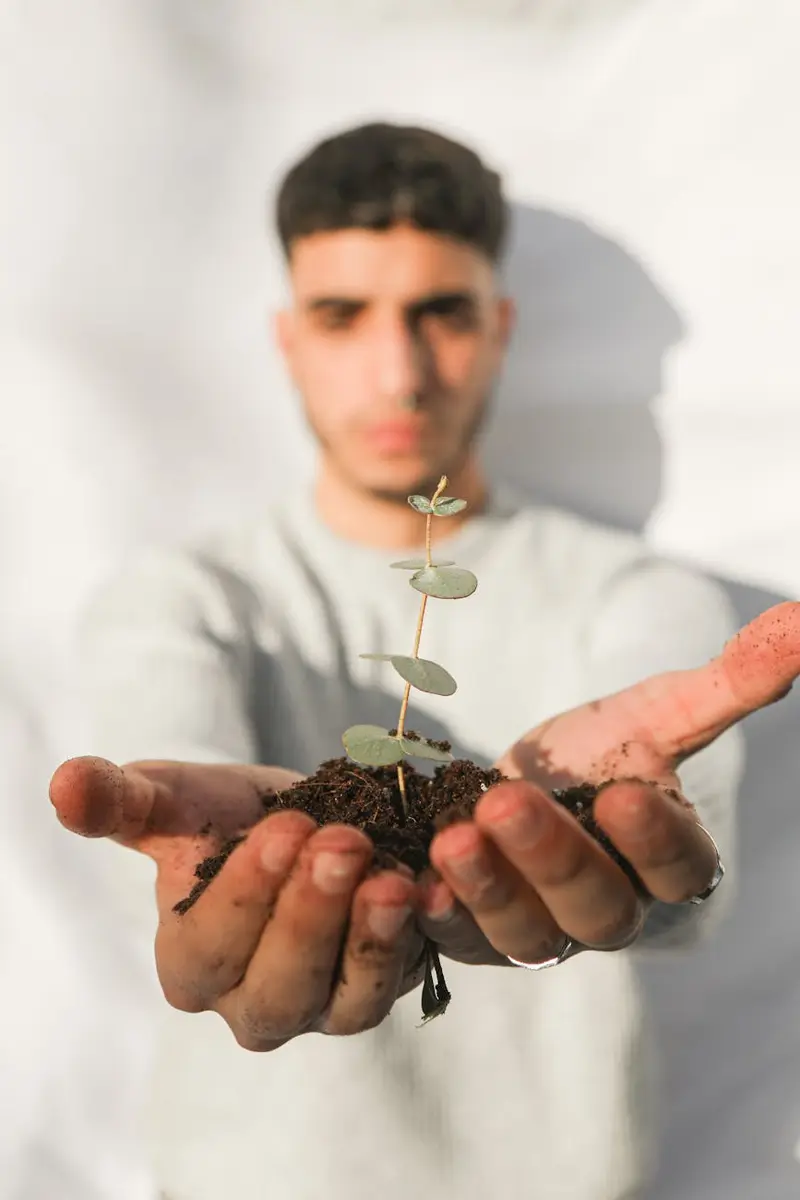
World Soil Day is held every December 5, the birthday of the late King Bhumibol Adulyadej of Thailand, whose work on soil conservation soil scientists chose to honour. It is run by the UN’s Food and Agriculture Organization (FAO), which notes that about 95% of our food comes from soils and that forming just 2–3 cm of soil can take up to 1,000 years (FAO).
Origin: From a Soil Scientists’ Resolution to the UN
- 2002, Bangkok. The International Union of Soil Sciences (IUSS) proposed December 5 as World Soil Day, the birthday of King Bhumibol, to honour his promotion of soil science and soil conservation (European Geosciences Union, Soil System Sciences blog).
- June 2013, Rome. With Thailand leading and support from FAO’s Global Soil Partnership, the FAO Conference adopted resolutions 4/2013 and 5/2013 on 22 June 2013 and asked the UN to make the day official (FAO; resolutions recalled in A/RES/68/232).
- 20 December 2013, New York. The UN General Assembly adopted resolution A/RES/68/232, “World Soil Day and International Year of Soils,” which “decides to designate 5 December as World Soil Day and to declare 2015 the International Year of Soils.” The resolution notes that a world day and an international year on the same subject were proclaimed together only “exceptionally… without constituting a precedent.”
- 5 December 2014. The first official World Soil Day. Since then FAO has run it through the Global Soil Partnership, choosing a theme each year (FAO).
Past themes include “Stop Soil Erosion, Save Our Future” (2019), “Keep Soil Alive, Protect Soil Biodiversity” (2020), “Soil, Where Food Begins” (2022) and “Caring for Soils: Measure, Monitor, Manage” (2024) (FAO). FAO announces each year’s theme on its World Soil Day page.
Awards. Thailand sponsors the King Bhumibol World Soil Day Award, given to the person or institution that ran the best World Soil Day events the previous year (events must run between 1 November and 31 December and follow that year’s theme). Winners receive a medal, USD 15,000 and a trip to Thailand to collect it (FAO).
How the Day Is Marked
- Thailand. The Land Development Department holds the national ceremony. In 2017 it took place at the Khao Cha-Ngum Royal Study Centre for Land Degradation Development in Ratchaburi province, where more than 2,000 officials, farmers, teachers and students toured experimental plots and soil pits and farmers were recognised for sustainable soil management (UNCCD).
- Switzerland: “Proof by underpants.” In 2021 about 1,000 people in a citizen-science project run by the federal research centre Agroscope and the University of Zurich buried cotton underwear in gardens, fields, meadows and forests, dug it up two months later and sent photos and soil samples to the scientists. The more the cotton had rotted away, the more active the soil life (Agroscope).
- Canada: Soil Your Undies. The Soil Conservation Council of Canada runs a home version: bury a new pair of white 100% cotton briefs, check them after two months and post the results with #SoilYourUndies. “The more decomposition, the healthier the soil!” (Soil Conservation Council of Canada).
- Soil scientists worldwide. The European Geosciences Union’s soil division marks the day by asking soil scientists to share photos of their work (EGU).
Try It: The Jar Test for Soil Texture
Texture, the mix of sand, silt and clay, decides how a soil drains and holds nutrients. This method follows Clemson Cooperative Extension.
You need: a clear, straight-sided jar with a lid (a quart/1-litre canning jar works), a sieve or old colander, a permanent marker, a ruler and a timer.
- Collect soil from the top 15 cm (6 in) of the spot you want to test. Sift out stones, roots and debris.
- Fill the jar about one-third with the sifted soil, then top it up with water, leaving a little space at the top.
- Shake hard for a few minutes until there are no clumps and the mixture is an even slurry.
- After 1 minute, set the jar on a level surface and mark the top of the layer at the bottom. That is sand.
- After 2 hours, mark the top of the next layer. That is silt.
- After 48 hours, mark the top of the final layer settled on the silt. That is clay. The water may still look cloudy.
- Measure each layer and the total height, then work out percentages: % sand = sand height ÷ total height × 100, and the same for silt and clay.
- Look it up on a soil texture triangle. For example, about 40% sand, 40% silt and 20% clay is a loam.
Combine it with the undies test: bury the cotton in the same spot on World Soil Day and dig it up in early February to see how active the soil is as well as what it is made of.
Messages
- “Happy World Soil Day! Celebrating the ground beneath our feet on King Bhumibol’s birthday.”
- “Buried a pair of cotton underpants for Soil Your Undies. Dig them up later to see what the soil has eaten.”
- “A jar of soil, some water and patience: watch the sand, silt and clay settle today.”
- “To the farmers and soil scientists who keep our earth alive: happy World Soil Day.”
- “Healthy soil, healthy food. Happy World Soil Day!”
- “Soil takes centuries to form and moments to lose. Look after it today.”
Quotes
- “The Nation that destroys its soil destroys itself. – Franklin D. Roosevelt”
- “The soil is the great connector of our lives, the source and destination of all. – Wendell Berry”
- “There’s nothing under the ground that’s worth more than the little layer of topsoil sitting on top of it. – Wendell Berry”
- “We are of the soil and the soil is of us. – Luther Standing Bear”
- “The real wealth of the Nation lies in the resources of the earth: soil, water, forests, minerals, and wildlife. – Rachel Carson”
- “Agriculture… is our wisest pursuit, because it will in the end contribute most to real wealth, good morals and happiness. – Thomas Jefferson”
- “We know more about the movement of celestial bodies than about the soil underfoot. – Attributed to Leonardo da Vinci”
- “To forget how to dig the earth and to tend the soil is to forget ourselves. – Attributed to Mahatma Gandhi”
- “Essentially, all life depends upon the soil. – Attributed to Charles E. Kellogg”
FAQ
When is World Soil Day 2026? World Soil Day is observed annually on December 5th, making it Saturday, December 5, 2026.
Why is World Soil Day on December 5? It is the birthday of King Bhumibol Adulyadej of Thailand (Rama IX). The International Union of Soil Sciences proposed the date in 2002 to honour his promotion of soil science and soil conservation (EGU).
Who established World Soil Day? The UN General Assembly, in resolution A/RES/68/232 of 20 December 2013, after the FAO Conference endorsed it in June 2013. The same resolution declared 2015 the International Year of Soils (UN).
Who organises it? FAO, through its Global Soil Partnership, which sets the yearly theme, publishes materials and runs the King Bhumibol World Soil Day Award and the Glinka World Soil Prize (FAO).
How long does it take soil to form? FAO says producing 2–3 cm of soil can take up to 1,000 years (FAO).
How long does a jar soil test take? About two days. Sand settles within a minute, silt within about two hours and clay within roughly 48 hours (Clemson Extension).
Related Celebrations
As you observe World Soil Day, explore our guides for Earth Day for environmental protection, World Environment Day for conservation action, and National Farmers Day for agricultural appreciation. For sustainability celebrations, check our World Wildlife Day and International Mountain Day articles.
Related holidays
December 11
International Mountain Day
October 12
National Farmers Day
December 5
International Volunteer Day
December 3
International Day