
Friday, December 11, 2026 · in 32 days
International Mountain Day: History, Alpine Traditions & Quotes 2026
How the UN's International Year of Mountains led to International Mountain Day on December 11, how FAO picks each year's theme, the UNESCO-listed transhumance and Alpine pasture traditions, an Alpine herders' macaroni recipe, plus messages and quotes.
Updated 6 messages 9 quotes Tap to copy any message
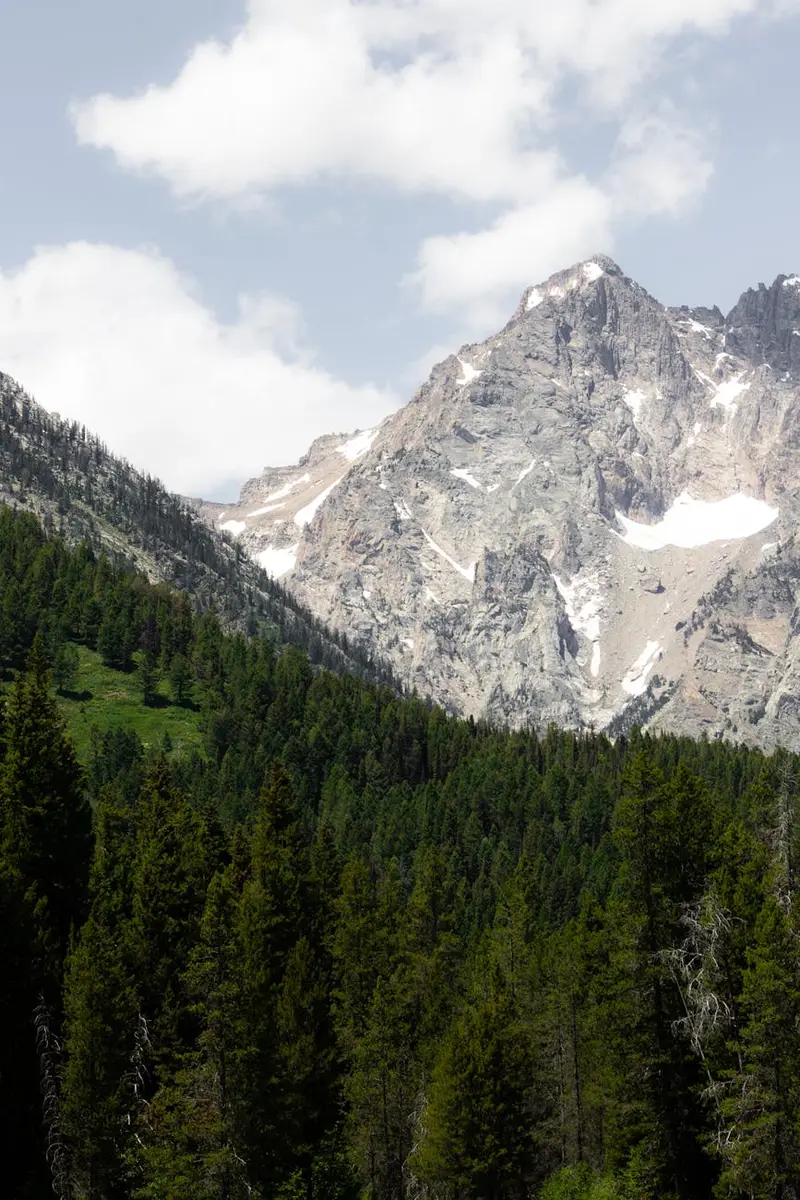
International Mountain Day is held every December 11 and is coordinated by the UN Food and Agriculture Organization (FAO). It grew out of the International Year of Mountains in 2002, and its focus is as much on the roughly 1.2 billion people who live in mountain areas as on the peaks themselves (FAO).
Origin: The International Year of Mountains
The UN General Assembly proclaimed 2002 the International Year of Mountains in resolution 53/24 of 10 November 1998, with FAO as lead agency. The year closed with the Bishkek Global Mountain Summit in Kyrgyzstan (28 October to 1 November 2002) and had prompted 74 national committees and major meetings in Bhutan, Canada, Ecuador, Germany, India, Italy, Kyrgyzstan, Nepal, Peru and Switzerland, as the Assembly recorded afterwards (A/RES/57/245).
On 20 December 2002 the Assembly adopted resolution A/RES/57/245, which “decides to designate 11 December as International Mountain Day, as from 11 December 2003,” and encourages events “to highlight the importance of sustainable mountain development.” The same resolution noted the new International Partnership for Sustainable Development in Mountain Regions, launched at the 2002 World Summit in Johannesburg, and FAO’s offer to host its secretariat. That partnership is today’s Mountain Partnership, whose secretariat in FAO’s Forestry Division coordinates the day (FAO).
How Each Year’s Theme Works
FAO announces a theme for every edition, and themes often tie in with a UN international year. Past themes include (FAO):
- 2023: Restoring mountain ecosystems.
- 2024: Mountain solutions for a sustainable future (innovation, adaptation and youth).
- 2025: Glaciers and their importance for water, food and livelihoods in mountains and beyond.
- 2026: “Mountain pastoralists: Sustaining rangelands, knowledge and livelihoods,” a contribution to the International Year of Rangelands and Pastoralists 2026.
FAO’s pastoralism figures give a sense of the scale: alpine pasture makes up over a third of Swiss farmland, 85% of Kyrgyzstan’s agricultural land is pasture, and India has an estimated 13 million pastoralists from more than 46 communities (FAO).
Mountain Traditions Recognised by UNESCO
- Transhumance in ten countries. UNESCO’s Representative List includes “Transhumance, the seasonal droving of livestock,” shared by Albania, Andorra, Austria, Croatia, France, Greece, Italy, Luxembourg, Romania and Spain (inscribed in its current form in 2023). Twice a year, in spring and autumn, herders move thousands of animals along established trails on foot or horseback with their dogs, and communities mark the start and end of each season with festivals and herd crossings (UNESCO).
- The glacier sheep drive, Ötztal Alps. Each early summer 70–80 drivers from South Tyrol’s Schnalstal and Vinschgau take about 5,000–5,500 sheep over the Timmelsjoch (2,494 m), Hochjoch (2,885 m) and Niederjoch (3,017 m) to pastures in Austria’s Ötz Valley, returning in autumn. It is the only cross-border transhumance in the Alps that crosses glaciers, and research suggests the drives have taken place for at least 6,000 years (Austrian Commission for UNESCO).
- The Swiss Alpine season. In December 2023 UNESCO added the “Alpine season,” the summer grazing of livestock on high pastures documented since the Middle Ages, together with the food production and tool-making crafts that go with it, on a dossier from the Swiss Federal Office of Culture (CIPRA).
Recipe: Älplermagronen (Alpine Herders’ Macaroni)
A classic Swiss alpine dish made from what a summer pasture has on hand: potatoes, pasta, cream and mountain cheese, served with applesauce. It suits a pastoralism-themed Mountain Day. Serves 4, about 40 minutes.
Ingredients
- 400 g (14 oz) waxy potatoes, peeled and cut into 2 cm cubes
- 300 g (10 oz) short macaroni or penne
- 200 ml (3/4 cup) cream
- 100 ml (scant 1/2 cup) milk
- 150 g (1 1/2 cups) grated alpine cheese such as Gruyère or Appenzeller
- 2 onions, thinly sliced
- 2 tbsp butter
- Salt, pepper and a pinch of nutmeg
- 4 apples (or 300 g ready-made applesauce) and 1 tbsp sugar, to serve
Method
- Applesauce first (15 minutes). Peel, core and chop the apples. Simmer with the sugar and 3 tbsp water, covered, until soft, then mash. Serve warm or cold.
- Onions (15–20 minutes). Melt the butter in a frying pan and cook the onions over medium-low heat, stirring now and then, until deep golden.
- Potatoes and pasta (12–15 minutes). Bring a large pot of salted water to the boil. Add the potatoes; after 5 minutes add the pasta and cook until both are just tender. Drain.
- Sauce (3 minutes). Return the pot to low heat with the cream and milk. When it steams, stir in the potatoes, pasta and cheese until melted and creamy. Season with salt, pepper and nutmeg.
- Serve topped with the onions, with applesauce on the side. Fried bacon lardons are a common addition.
Messages
- “Today we thank the herders who still walk their flocks up to the high pastures every summer.”
- “Happy International Mountain Day to the shepherds of the Ötztal, crossing glaciers with their sheep.”
- “A pot of Älplermagronen, a view of the peaks and a toast to the people who live up there. Happy Mountain Day!”
- “Mountains remind us that some challenges are worth the climb and some views are worth the effort.”
- “Today we appreciate mountain communities who are guardians of alpine ecosystems and traditions.”
- “Happy Mountain Day to the peaks that store our water, feed our rivers and inspire our poets.”
Quotes
- “The mountains are calling and I must go. – John Muir”
- “Climb the mountains and get their good tidings. Nature’s peace will flow into you as sunshine flows into trees. – John Muir”
- “Because it’s there. – George Mallory”
- “Have we vanquished an enemy? None but ourselves. – George Mallory”
- “Great things are done when Men & Mountains meet; this is not done by jostling in the street. – William Blake”
- “Mountains are the beginning and the end of all natural scenery. – John Ruskin”
- “Getting to the summit is optional, getting down is mandatory. – Ed Viesturs”
- “A man can hardly be a beast or a fool alone on a great mountain. – Francis Kilvert”
- “Mountains are not stadiums where I satisfy my ambition to achieve, they are the cathedrals where I practice my religion. – Attributed to Anatoli Boukreev”
FAQ
When is International Mountain Day 2026? International Mountain Day is observed annually on December 11th, making it Friday, December 11, 2026.
Who established International Mountain Day? The UN General Assembly, in resolution A/RES/57/245 of 20 December 2002, as a follow-up to the International Year of Mountains. It has been observed since 11 December 2003 (UN).
Who organises it? FAO leads the observance, and the Mountain Partnership Secretariat, based in FAO’s Forestry Division, coordinates it worldwide (FAO).
What is this year’s theme? FAO announces a new theme for each edition on its International Mountain Day site, often linked to that year’s UN international year; recent themes are listed above (FAO).
How many people live in mountain areas? About 1.2 billion, according to FAO, and mountains are home to about a quarter of the world’s land-based biodiversity (FAO).
What is transhumance? The seasonal movement of herds between lowland and upland pastures, usually in spring and autumn. UNESCO lists it as intangible heritage of ten European countries (UNESCO).
Related Celebrations
As you celebrate International Mountain Day, explore our guides for Earth Day for environmental protection, World Environment Day for conservation action, and World Wildlife Day for ecosystem preservation. For outdoor celebrations, check our National Running Day and International Yoga Day articles.
Related holidays
December 5
World Soil Day
March 3
World Wildlife Day
June 8
World Ocean Day
December 10
Human Rights Day