
Sunday, February 7, 2027 · in 90 days
Chinese New Year Traditions, Dumplings & Greetings 2027
How the Chinese New Year date is set, the Nian legend and red-envelope customs, how Vietnam, Korea and Singapore celebrate, a step-by-step jiaozi dumpling recipe, plus greetings for the Year of the Goat.
Updated 8 messages 8 quotes Tap to copy any message
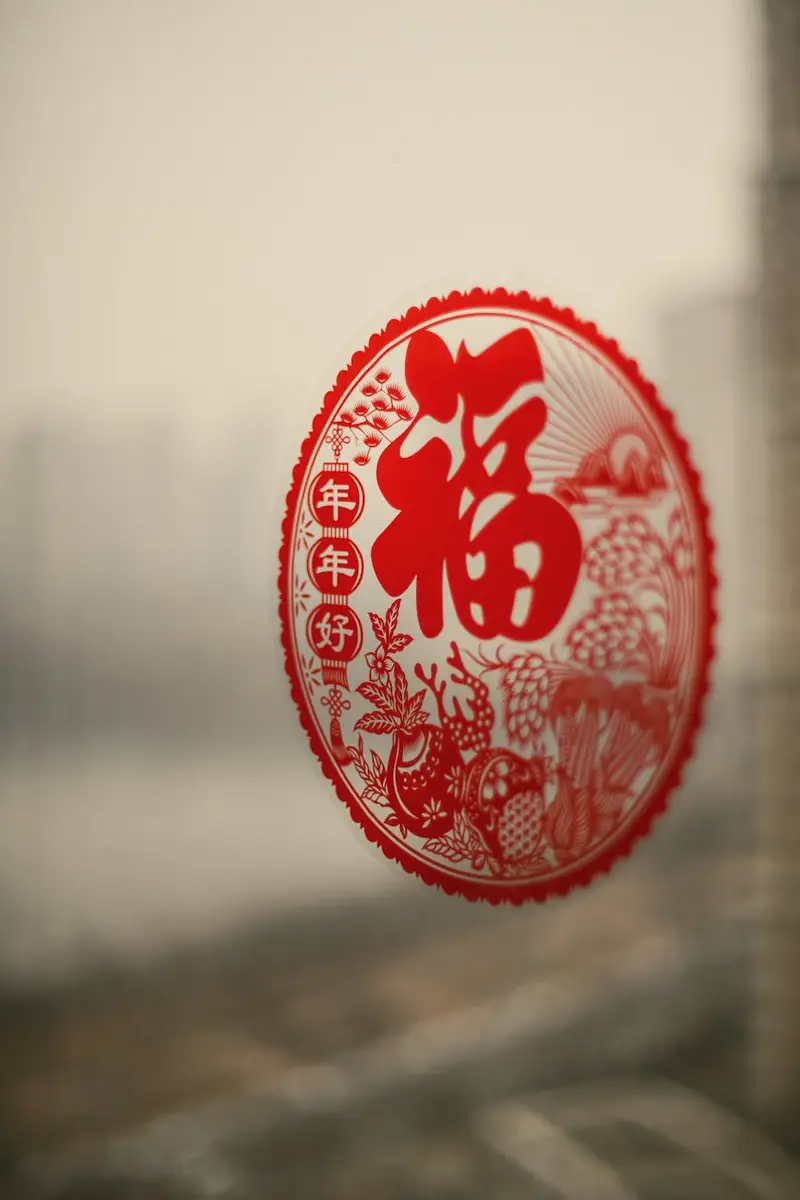
Chinese New Year, or the Spring Festival, begins on the first day of the first month of the Chinese lunisolar calendar and runs for 15 days, from New Year’s Eve to the Lantern Festival. In December 2024 UNESCO added “Spring festival, social practices of the Chinese people in celebration of traditional new year” to its Representative List of the Intangible Cultural Heritage of Humanity (decision 19.COM 7.b.29), describing the cleaning, reunion dinners, offerings to ancestors and New Year visits that make up guonian, “passing the year” (UNESCO).
Origin and How the Date Is Set
The Shanghai municipal government’s information office says historical records take the festival back more than 4,000 years, when the second new moon after the winter solstice was chosen as the start of the year. It went by different names under different dynasties (yuanri, yuandan and others, all meaning the start of the year) and was only officially named the Spring Festival in the early 20th century (Touch Shanghai).
The rule. The Chinese calendar requires the winter solstice to fall in the 11th month. New Year’s Day is normally the second new moon after the solstice; in the rare case that a leap month follows month 11 or 12, it is the third (UC Berkeley Space Sciences Laboratory). In practice that puts the festival between late January and mid-February. Because months follow the moon, a leap month is added every second or third year to keep the calendar in step with the seasons, which is why the date moves around by up to a month.
The Nian legend. The best-known story behind the red decorations is that of Nian, a monster that attacked villages at midnight on New Year’s Eve. According to the legend, a Taoist monk discovered Nian feared the colour red and loud noises, and taught villagers to paste red couplets on their doors and set off firecrackers (Touch Shanghai).
The Festival Timeline
- Before New Year’s Eve: households clean thoroughly, stock food and prepare dishes in advance (UNESCO). Hundreds of millions of people travel home during chunyun, the 40-day Spring Festival travel rush; in 2018 travellers made more than 2.98 billion trips (Touch Shanghai).
- New Year’s Eve (chuxi): the reunion dinner, nianyefan, is the most important event of the festival, and people try their hardest to get home for it. In northern China families make jiaozi (dumplings) after dinner and eat them around midnight; their shape recalls yuanbao, gold or silver ingots. In the south, families tend to have large banquets and make niangao, glutinous rice cake, whose name sounds like “getting better year after year” (Touch Shanghai).
- New Year’s Day and the days after: people wear new clothes, make offerings to heaven, earth and their ancestors, and visit elders, relatives, friends and neighbours (UNESCO).
- Day 7, renri (“Human Day”): in folklore, the goddess Nüwa created humans on the seventh day, so it is everyone’s birthday (BiblioAsia, National Library Board Singapore).
- Day 15, the Lantern Festival: the festival ends on the 15th day of the first month (Touch Shanghai).
Red Envelopes: What They Mean and How to Give Them
Red envelopes (hongbao, or lai see in Cantonese) contain yasuiqian, money to “suppress” evil spirits: the character 岁 (year) sounds like 祟 (evil spirit). They were first meant to protect children from sickness and misfortune, and parents would tuck them under sleeping children’s pillows on New Year’s Eve. Children then collect more from senior relatives on New Year visits, and envelopes are sometimes given to elderly relatives as well (Touch Shanghai).
Practical points:
- Use crisp notes. Clean, new-looking notes are expected, and banks plan for the rush: in Hong Kong the Monetary Authority arranges for new and “good-as-new” notes to be exchanged at the three note-issuing banks for about two weeks before the holiday (Hong Kong government news). Get yours early.
- Digital is accepted. The same notice encourages sending lai see electronically through the Faster Payment System or e-wallets.
- Who gives to whom: parents and senior relatives give to children; envelopes can also go to elderly relatives as a wish for their health.
How Neighbours Celebrate the Lunar New Year
- Vietnam: Tết Nguyên Đán. For many families Tết begins on the 23rd day of the last lunar month, when they release live carp for the Kitchen Gods to ride to Heaven and report on the household. The same day a cây nêu bamboo pole is put up. Families make bánh chưng, square cakes of sticky rice, mung beans and pork wrapped in dong leaves, which once meant taking turns watching the pot for about 15 hours. The first visitor of the new year is believed to set the family’s fortune, so a successful, good-natured person is invited to be first through the door (xông đất), ideally between midnight and the next morning (Vietnam Government News).
- Korea: Seollal. Younger family members perform sebae, a deep New Year bow to their elders, often in hanbok, with the greeting “Saehae bok mani badeuseyo” (“Receive many blessings in the new year”) (Korea.net). The signature dish is tteokguk, rice-cake soup whose white colour stands for a fresh start; jeon pancakes and japchae noodles are also served (Korea.net).
- Singapore and Malaysia: lo hei. Chinese Singaporeans and Malaysians toss yu sheng (yee sang in Malaysia), a raw fish salad, on renri, the seventh day. The practice dates from the 1960s and is linked to the chefs later called Singapore’s “Four Heavenly Culinary Kings”. Chef Sin Leong recalled that diners objected when the kitchen tossed the salad for them: they said it took away their good fortune and wanted to toss it themselves (BiblioAsia).
Recipe: Pork and Cabbage Jiaozi (about 40 dumplings)
Northern families wrap these together on New Year’s Eve and eat them at midnight. Allow 2 hours with a few people helping.
Dough
- 400 g (3 1/4 cups) all-purpose flour
- 200 ml (3/4 cup + 1 tbsp) cold water
- 1/4 tsp salt
Filling
- 300 g (11 oz) napa cabbage, finely chopped
- 1 tsp salt (for the cabbage)
- 400 g (14 oz) ground pork, not too lean
- 3 spring onions, finely chopped
- 1 tbsp finely grated ginger
- 2 tbsp light soy sauce
- 1 tbsp Shaoxing rice wine
- 1 tbsp toasted sesame oil
- 1/2 tsp ground white pepper
- 60 ml (1/4 cup) water or unsalted stock
Dipping sauce: 3 tbsp black (Chinkiang) vinegar, 1 tbsp soy sauce, 1 tsp chili oil, a little shredded ginger.
Method
- Dough: mix the flour and salt, add the water gradually and knead for 8 to 10 minutes until smooth. Cover and rest for 30 minutes.
- Cabbage: toss the cabbage with 1 tsp salt, leave 15 minutes, then squeeze out as much water as you can in a clean towel.
- Filling: stir the pork with the soy sauce, wine, sesame oil, pepper and ginger in one direction for 2 minutes, adding the water a spoonful at a time until the mixture is sticky. Fold in the cabbage and spring onions.
- Wrappers: roll the dough into a log, cut it into 40 pieces (about 15 g each), flatten each piece and roll it into an 8 cm (3 in) circle, thinner at the edges than the centre.
- Fold: put 1 heaped teaspoon of filling in the middle, fold the circle in half and pinch the top, then pleat one side towards the centre and press firmly to seal. Keep finished dumplings on a floured tray, not touching.
- Cook: bring a large pot of water to a rolling boil. Add 15 to 20 dumplings and stir gently so they don’t stick. When the water boils again, add 125 ml (1/2 cup) cold water; repeat twice more. After the third boil (about 7 to 8 minutes in total) the dumplings float and look puffed; cut one open to check the pork is cooked through.
- Lift out with a slotted spoon and serve straight away with the dipping sauce.
To freeze: freeze the uncooked dumplings on the tray, then bag them. Cook from frozen, adding 2 to 3 minutes.
Chinese New Year Messages
- “Gong Xi Fa Cai! May the Year of the Goat bring you wisdom, prosperity, and good fortune.”
- “Kung Hei Fat Choy! May the new year carry away your worries and bring you abundant blessings.”
- “Happy Chinese New Year! May every dumpling you eat this year bring you good fortune.”
- “Wishing you a safe journey home for the reunion dinner, and a table with fish left over for a year of plenty.”
- “May your red envelopes be crisp, your doors be bright with couplets, and your family all under one roof. Happy Spring Festival!”
- “From New Year’s Eve to the Lantern Festival: fifteen days of family, food and good luck to you.”
- “Saehae bok mani badeuseyo! Wishing you many blessings in the new year.”
- “Chúc mừng năm mới! May your first visitor of Tết bring a year of luck to your home.”
Inspiring Quotes
- “Isn’t it also great when friends visit from distant places? – Confucius”
- “Reviewing what you have learned and learning anew, you are fit to be a teacher. – Confucius”
- “Learning without thought is labor lost; thought without learning is perilous. – Confucius”
- “When we see men of worth, we should think of equaling them. – Confucius”
- “Knowing others is intelligence; knowing yourself is true wisdom. – Laozi”
- “Hope is like a road in the country; there was never a road, but when many people walk on it, the road comes into existence. – Lu Xun”
- “Better a diamond with a flaw than a pebble without. – Chinese Proverb”
- “Do not fear going forward slowly; fear only to stand still. – Chinese Proverb”
Decorating the Traditional Way
- Spring Festival couplets (chunlian): red paper strips by the door with auspicious words or lines of poetry, from the Nian legend.
- New Year paintings (nianhua): a tradition nearly 2,000 years old, possibly descended from “Door God” pictures. Famous centres include Yangliuqing in Tianjin, Zhuxian Town in Kaifeng, Taohuawu in Suzhou, Yangjiabu in Shandong and Mianzhu in Sichuan (Touch Shanghai).
- Blossoms: in Vietnam, peach and ochna blossoms and kumquat trees stand for warmth, wealth and good luck (Vietnam Government News).
Frequently Asked Questions
When is Chinese New Year 2027? Chinese New Year 2027 falls on Sunday, February 7, 2027. The celebration traditionally lasts for 15 days, ending with the Lantern Festival.
What animal represents 2027 in the Chinese zodiac? 2027 is the Year of the Goat according to the Chinese zodiac. Each of the twelve zodiac animals is associated with its own traits, and the cycle repeats every twelve years.
Why does the date change every year? The Chinese calendar is lunisolar: months start with the new moon, and the new year normally begins on the second new moon after the winter solstice. A leap month every second or third year keeps it aligned with the seasons (UC Berkeley Space Sciences Laboratory).
Is it Chinese New Year or Lunar New Year? Both are used. “Spring Festival” is the official name in China (Touch Shanghai), while “Lunar New Year” also covers the Vietnamese Tết and Korean Seollal, which fall on or near the same day but have their own customs.
Why is the house cleaned before New Year? Cleaning and preparing food beforehand is part of guonian, getting the household ready to welcome the year (UNESCO).
Related Celebrations
As you plan your Chinese New Year celebration, you might also enjoy exploring our guides for New Year festivities, Spring Equinox seasonal celebrations, and the Mid-Autumn Festival.
Related holidays
February 9
Mardi Gras History, King Cake Recipe
February 9
National Pizza Day
February 4
World Cancer Day
February 11
International Day