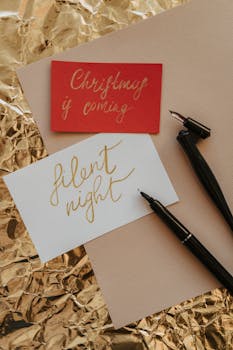
How to Write Heartfelt Holiday Messages That Leave a Lasting Impression
Learn the art of crafting meaningful holiday messages for any occasion. From choosing the right tone to personalizing your words, this guide helps you express genuine emotion in every greeting.
The holidays are a time for connection, gratitude, and celebration. Yet when it comes to putting our feelings into words, many of us find ourselves staring at a blank card or an empty text box, unsure of what to say. A generic “Happy Holidays” gets the job done, but it rarely leaves a lasting impression. The truth is, a well-crafted holiday message can strengthen relationships, bring comfort to someone who needs it, and create memories that outlast the season itself.
Whether you are writing a Christmas card, a Thanksgiving note, or a birthday greeting, the principles of heartfelt communication remain the same. This guide will walk you through everything you need to know to write messages that truly resonate.
Why Personalized Messages Matter
In an age of mass-produced greeting cards and copy-pasted social media posts, a personalized message stands out like a handwritten letter in a mailbox full of junk mail. Research in psychology consistently shows that people value thoughtfulness over extravagance. A study from the Journal of Experimental Psychology found that recipients of personalized gifts and messages reported feeling significantly more valued than those who received expensive but impersonal ones.
When you take the time to craft a message that speaks directly to someone, you are telling them that they matter enough to warrant your time and attention. That feeling of being seen and appreciated is one of the most powerful gifts you can give, and it costs nothing but a few minutes of reflection.
Understanding Your Audience
Before you write a single word, pause and think about the person who will be reading your message. Consider their personality, your shared history, and what they might be going through at this time of year. Not everyone experiences the holidays the same way. For some, this season brings pure joy. For others, it can be a reminder of loss, loneliness, or difficult times.
Ask yourself a few questions: What is your relationship with this person? What do you appreciate most about them? Is there a specific memory or inside joke that would make them smile? Are they going through a challenging period that you should acknowledge with sensitivity? The answers to these questions will shape the tone, length, and content of your message.
Choosing the Right Tone
The tone of your message should match both the occasion and your relationship with the recipient. Getting this right is essential to making your words feel authentic rather than forced.
Formal and Professional
For colleagues, clients, or acquaintances, keep your tone warm but professional. Express appreciation for the relationship and offer well-wishes for the coming year. Avoid overly personal remarks or assumptions about how they celebrate. Phrases like “Wishing you a wonderful holiday season” or “Thank you for a great year of collaboration” strike the right balance between friendly and respectful.
Family
Family messages can be more personal and nostalgic. Reference shared traditions, express gratitude for their role in your life, or recall a favorite memory from the past year. For parents and grandparents, acknowledging their sacrifices and love goes a long way. For siblings, a touch of humor mixed with genuine affection often feels most natural.
Romantic Partners
Messages to a romantic partner should reflect the depth of your relationship. Be specific about what you love and appreciate. Rather than writing “You mean the world to me,” try something like “The way you always know when I need a quiet evening at home reminds me every day how lucky I am.” Specificity transforms a cliche into something deeply personal.
Friends
Friendship messages thrive on authenticity and shared experience. Reference an inside joke, a memorable adventure, or a moment when they showed up for you. Friends appreciate knowing that the unique qualities of your relationship are recognized and valued. Do not be afraid to be a little vulnerable and tell them what their friendship means to you.
Tips for Crafting Your Message
Once you know your audience and tone, it is time to write. Here are practical strategies for making every word count.
Start With a Specific Memory or Detail
Opening with something specific immediately signals that this is not a generic message. Instead of “Dear Mom, Happy Holidays,” try “Dear Mom, I was wrapping presents last night and remembered how you used to let me put the star on top of the tree when I was little.” This kind of opening draws the reader in and sets an emotional foundation for the rest of your message.
Express Gratitude Genuinely
Gratitude is the backbone of any heartfelt message, but it needs to feel real. Avoid vague statements like “Thanks for everything.” Instead, pinpoint something concrete: “Thank you for driving three hours to help me move last spring. I know it was a long day, but having you there made all the difference.”
Look Forward, Not Just Back
While reflecting on the past is powerful, including a forward-looking element adds hope and excitement to your message. Express what you are looking forward to in the coming year, whether it is a planned visit, a shared goal, or simply more time together.
Keep It the Right Length
A heartfelt message does not need to be an essay. For a card or a quick note, three to five sentences is often perfect. For a letter or a longer email, a few paragraphs will do. The key is that every sentence should earn its place. If a line does not add meaning or emotion, cut it.
Read It Aloud
Before you send or sign your message, read it out loud. This simple step helps you catch awkward phrasing, spot places where the tone shifts unexpectedly, and ensure the message sounds like something you would actually say.
Common Mistakes to Avoid
Even with the best intentions, there are pitfalls that can undermine your message.
Making it about yourself. A holiday message should center on the recipient, not on your own accomplishments or struggles. Save the annual life update for a separate conversation.
Using overly religious or cultural language without knowing the recipient’s background. When in doubt, opt for inclusive language that focuses on warmth and well-wishes rather than specific religious sentiments.
Being too generic. “Wishing you and yours a happy holiday season” is fine as a baseline, but if you are writing to someone you care about, push yourself to go deeper.
Forgetting to proofread. Misspelling someone’s name or sending a message riddled with typos can undermine the thoughtfulness you intended to convey.
Waiting too long. A message that arrives weeks after a holiday can feel like an afterthought. If you are running late, acknowledge it briefly and move on to the substance of your note.
Examples of Strong Opening Lines
Sometimes the hardest part is simply getting started. Here are a few opening lines to spark your creativity:
- “This time of year always makes me think of the Thanksgiving we spent snowed in at your cabin.”
- “I know this holiday season might feel different without Grandma here, and I wanted you to know I am thinking of you.”
- “Before the year ends, I wanted to make sure you know how much your friendship has meant to me these past twelve months.”
- “I still laugh every time I think about our Secret Santa mix-up last year.”
- “As I write this card, I am looking at the ornament you gave me, and it reminded me how thoughtful you always are.”
Each of these lines does something specific: it grounds the message in a shared experience, acknowledges an emotion, or highlights a quality of the recipient. From any of these starting points, the rest of the message flows naturally.
Bringing It All Together
Writing a heartfelt holiday message is not about being the most eloquent writer or finding the perfect words. It is about being genuine, being specific, and taking a moment to honor the people who make your life richer. The most memorable messages are not the ones that sound the prettiest. They are the ones that make the reader feel truly known.
This holiday season, challenge yourself to go beyond the generic greeting. Take five extra minutes to think about what each person means to you, and let your words reflect that. You might be surprised by how much a few thoughtful sentences can brighten someone’s day and deepen your connection.
For more holiday message inspiration, wishes, and greetings for every occasion, visit FestiveDay. Whether you need help finding the right words for a birthday, anniversary, or any celebration, our collection of messages and ideas is here to help you express what matters most.