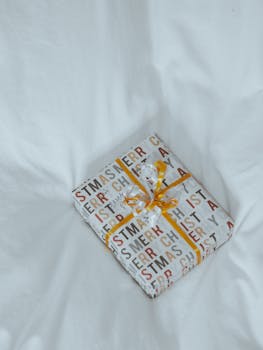
The Fascinating History of Christmas Traditions Around the World
Explore the origins of beloved Christmas customs from decorating trees to exchanging gifts. Discover how cultures worldwide celebrate the holiday season with unique traditions.
Every December, billions of people around the globe deck halls, exchange gifts, sing carols, and gather around glowing trees. These traditions feel timeless, as though they have always been part of the holiday season. But every Christmas custom has an origin story, and many of them are far more surprising than you might expect. From ancient pagan rituals to modern commercial inventions, the history of Christmas traditions is a rich tapestry woven from cultures, religions, and centuries of evolution.
The Christmas Tree: From German Forests to Living Rooms Worldwide
The tradition of bringing an evergreen tree indoors and decorating it is one of the most iconic symbols of Christmas, yet it is a relatively recent development in the holiday’s long history. Evergreen boughs have been used as symbols of eternal life since ancient times. The Romans decorated with greenery during Saturnalia, and Norse and Celtic peoples hung evergreen branches to ward off evil spirits during the dark winter months.
The modern Christmas tree, however, traces its roots to 16th-century Germany. Devout Christians in the region began bringing decorated trees into their homes, and some historians credit Martin Luther with adding lighted candles to a tree after being inspired by the beauty of stars twinkling through evergreen branches on a winter walk. The tradition remained largely confined to Germany and German immigrant communities until the 1840s, when Queen Victoria and Prince Albert, who was German-born, were illustrated standing with their children around a decorated Christmas tree in a London newspaper. The image captivated the English-speaking world, and within a decade, the Christmas tree had become a staple of holiday celebrations across Britain and North America.
The Origins of Gift-Giving and St. Nicholas
Exchanging gifts at Christmas has its roots in several traditions. The biblical story of the Three Wise Men bringing gifts of gold, frankincense, and myrrh to the infant Jesus provided a religious foundation. But the figure most associated with Christmas gift-giving is St. Nicholas, a 4th-century Greek bishop from Myra, in modern-day Turkey.
St. Nicholas was renowned for his generosity, particularly toward children and the poor. One famous legend tells of how he secretly provided dowries for three impoverished sisters by tossing bags of gold through their window at night, saving them from being sold into servitude. Over the centuries, his feast day on December 6th became a time for gift-giving in many European countries.
The transformation of St. Nicholas into the modern Santa Claus happened gradually. Dutch settlers brought the tradition of “Sinterklaas” to America. In 1823, the poem “A Visit from St. Nicholas,” commonly known as “Twas the Night Before Christmas,” gave Americans a vivid image of a jolly, round figure arriving by reindeer-drawn sleigh. Coca-Cola’s advertising campaigns in the 1930s further cemented the red-suited, white-bearded image of Santa Claus that we recognize today.
The Legend of Christmas Stockings
The tradition of hanging stockings by the fireplace ties directly back to the St. Nicholas legend. According to the most popular version of the story, the gold that St. Nicholas tossed through the window landed in stockings that the three sisters had hung by the fire to dry. Word of the miracle spread, and children began hanging their stockings in hopes that St. Nicholas would fill them with gifts.
In many countries, shoes rather than stockings serve the same purpose. Dutch children traditionally leave their shoes by the fireplace on the eve of St. Nicholas Day, filling them with carrots and hay for Sinterklaas’s horse, hoping to find treats and small gifts in return.
Caroling Through the Ages
Christmas caroling has roots in medieval England, where wandering musicians would travel from house to house performing songs in exchange for food, drink, or money. The word “carol” originally referred to a circle dance accompanied by singing, and these early carols were not necessarily religious in nature.
By the 15th century, English composers began writing carols specifically for the Christmas season, blending religious themes with folk melodies. Many of the carols we know today, such as “Silent Night” (composed in Austria in 1818) and “O Holy Night” (written in France in 1847), were created in the 18th and 19th centuries. The Victorian era saw a major revival of caroling as a cherished Christmas tradition, and the publication of carol collections made the songs widely accessible for the first time.
The Yule Log: From Bonfire to Dessert
The Yule log tradition predates Christianity entirely. In Norse mythology, the Yule festival celebrated the return of the sun during the winter solstice. Families would bring a massive log into the home and set it ablaze, keeping it burning for the twelve days of the festival. The ashes were believed to have protective and fertilizing powers.
As Christianity spread through Europe, the Yule log was absorbed into Christmas celebrations. In England and France, the tradition of burning a large log on Christmas Eve persisted for centuries. When smaller fireplaces and central heating made burning a massive log impractical, the French created the “buche de Noel,” a log-shaped cake made of chocolate and cream that remains a beloved Christmas dessert to this day.
Christmas Traditions From Around the World
One of the most fascinating aspects of Christmas is how different cultures have developed their own unique ways of celebrating. Here are some of the most distinctive traditions from around the globe.
Japan: A Kentucky Fried Christmas
In Japan, where Christians make up a small percentage of the population, Christmas is celebrated as a secular holiday centered on romance and, remarkably, fried chicken. A wildly successful 1974 marketing campaign by Kentucky Fried Chicken called “Kurisumasu ni wa Kentakkii” (Kentucky for Christmas) embedded the tradition so deeply that Japanese families now pre-order their KFC holiday meals weeks in advance. Lines often stretch around the block on Christmas Eve.
Iceland: The 13 Yule Lads
Instead of one Santa Claus, Icelandic children are visited by 13 Yule Lads, mischievous figures from folklore who each arrive on a different night during the 13 days before Christmas. Each Yule Lad has a distinct personality based on the type of prank he plays, with names like Spoon-Licker, Door-Slammer, and Sausage-Swiper. Children place a shoe on the windowsill each night and wake to find a small gift from the visiting Yule Lad if they have been good, or a rotting potato if they have been naughty.
Mexico: Las Posadas
In Mexico and many Latin American countries, the nine nights leading up to Christmas are marked by “Las Posadas,” a tradition reenacting Mary and Joseph’s search for lodging in Bethlehem. Neighbors take turns hosting processions that move from house to house, with participants singing traditional songs and requesting shelter. The host initially turns them away before finally welcoming them inside for food, drinks, and celebration. The festivities often include breaking pinatas and sharing tamales and ponche, a warm fruit punch.
Australia: Christmas on the Beach
In the Southern Hemisphere, Christmas falls during the height of summer. Australians have adapted the holiday to their climate, and a beach barbecue on Christmas Day is as quintessential to Australian culture as a roast dinner is to the British. Families gather on the sand with prawns, grilled meats, and cold drinks, while lifeguards at Bondi Beach famously wear Santa hats during their Christmas Day patrol.
Sweden: St. Lucia Day
On December 13th, Swedes celebrate St. Lucia Day, a festival of light during the darkest time of year. The eldest daughter in each family traditionally dresses in a white gown with a red sash and wears a crown of candles on her head. She serves coffee and saffron-flavored buns called “Lussekatter” to her family, beginning a season of holiday celebrations. The tradition honors St. Lucia, a 4th-century martyr associated with light and vision.
How Traditions Evolve
Christmas traditions are not frozen in time. They are living customs that shift with technology, migration, and cultural exchange. The Christmas card, now a ubiquitous tradition, was only invented in 1843 by Sir Henry Cole in London. Electric Christmas lights replaced dangerous candles in the early 20th century. The Elf on the Shelf, now a staple in millions of homes, was introduced in 2005 through a children’s book.
Each generation adds its own layer to the holiday. Families blend traditions from different cultural backgrounds, create new rituals that reflect their values, and adapt old customs to modern life. Video calls now connect families across continents on Christmas morning, and social media has turned decorating and gift-giving into shared experiences that reach far beyond the living room.
What makes Christmas traditions so powerful is not their age or origin, but the meaning we attach to them. Whether your family gathers around a tree, breaks a pinata, or heads to the beach, these shared rituals create a sense of belonging and continuity that transcends borders and generations. Understanding where these traditions come from only deepens our appreciation for the remarkable ways humanity celebrates light, generosity, and togetherness in the darkest days of the year.